
Adventures Of An Astral Traveler ~ Part II
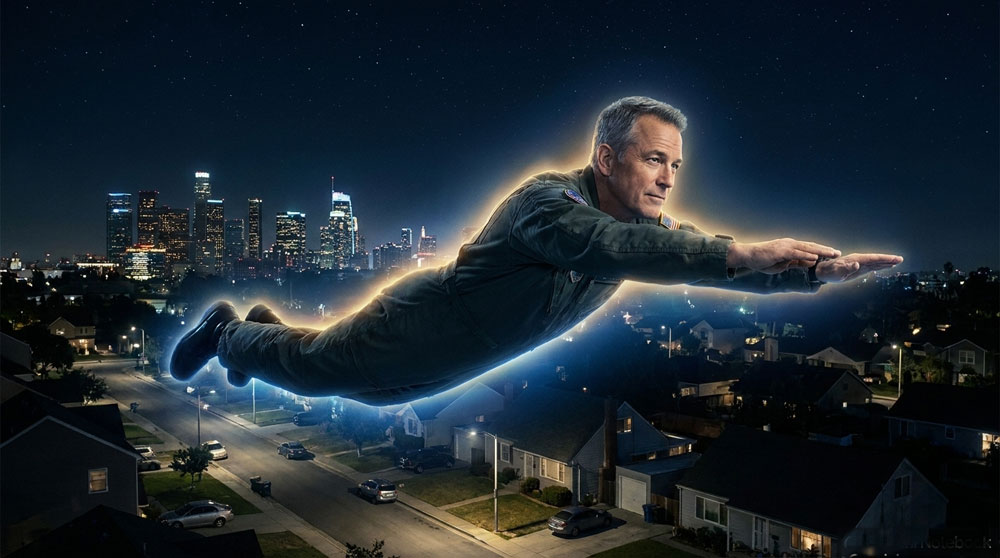 by Robert A. Monroe
It was beginning to seem a never-ending task, this answering of signals for help each time I went out-of-body, and it was certainly an inefficient way to do whatever was needed. I could spend the rest of my available physical life period doing this and nothing else and still make no perceptible dent in the mass of such signals.
The question was: why had I suddenly become exposed to these signals after so many years? And another question: why were they causing distress in my physical body?
It seemed that most if not all of these signals were originating in areas off the Interstate (as I was now accustomed to regard it) immediately adjoining the termination of physical existence, or death as we humans call it. I knew something of these areas but was not familiar with them. Further exploration was needed.
I began the next morning, about three o’clock, by taking a methodical, slow-motion approach. Feeling rested and relaxed, I started the phasing out of the physical and into the blackness of the out-of-body state, with left brain mode on full alert. I was now at the beginning of the Interstate, or rather on my entry ramp into it. Then, as I was about to bridge over the close-in areas with their obvious exit ramps, as I usually did, one of the strange signals pulled hard at me. Reluctantly, I followed it. (more…)
Posted in Astral Travel, Life After Death, Other Topicswith no comments yet.
Adventures Of An Astral Traveler
 by Robert A. Monroe
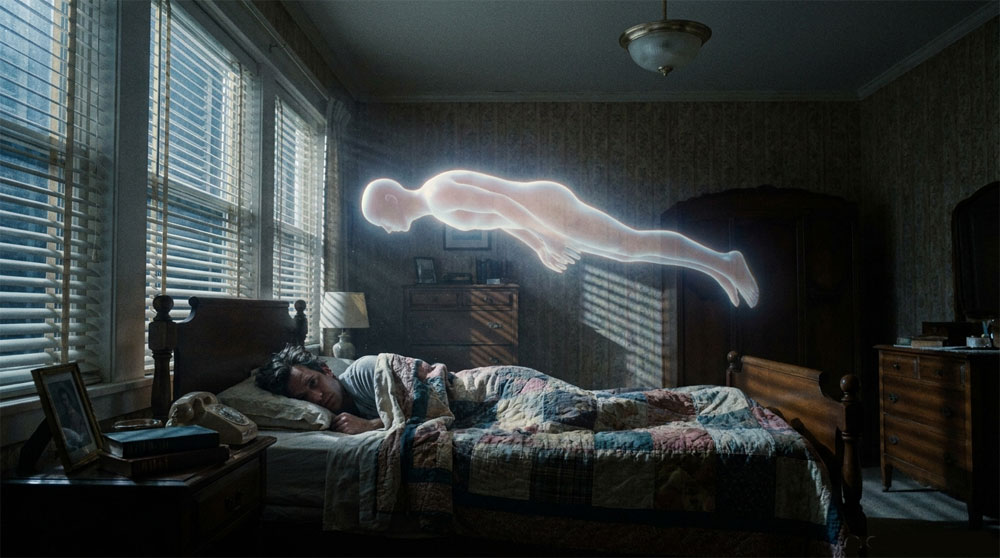
This journey began in the spring of 1958, when a pragmatic 42-year-old broadcasting executive, Robert A. Monroe, was living a conventional suburban life with his family. Without any prior history of mystical interests or unusual occurrences, his routine existence was unexpectedly disrupted during a quiet afternoon rest. As he lay relaxing, a sudden and intense surge of internal vibrations swept through his physical body. The sensation felt like an overwhelming electrical frequency surging through his frame, leaving him completely paralyzed and deeply disoriented.
Frightened and confused by these recurring episodes, the initial reaction was one of acute panic and concern for his physical health. Suspecting a severe neurological illness, a brain tumor, or an impending stroke, he worried that he might be dying or losing his sanity. To seek answers, he underwent thorough medical and psychiatric evaluations. However, his doctors found him to be in excellent physical and mental health, unable to identify any medical pathology or physiological cause behind the mysterious shocks.
The mystery deepened during a subsequent vibrational episode when, instead of remaining trapped in immobility, a dramatic separation occurred. He felt himself floating upward toward the ceiling of the room, only to look down and see his own physical body lying motionless on the furniture below. Conscious, alert, and fully aware in this altered state, he discovered that he possessed a non-physical “second body” capable of floating through solid structures and observing the physical world from a completely distinct perspective. (more…)
Posted in Astral Travel, Life After Death, Other Topicswith no comments yet.
Exploring The Vibratory Field And Its Matrix
 Introduction
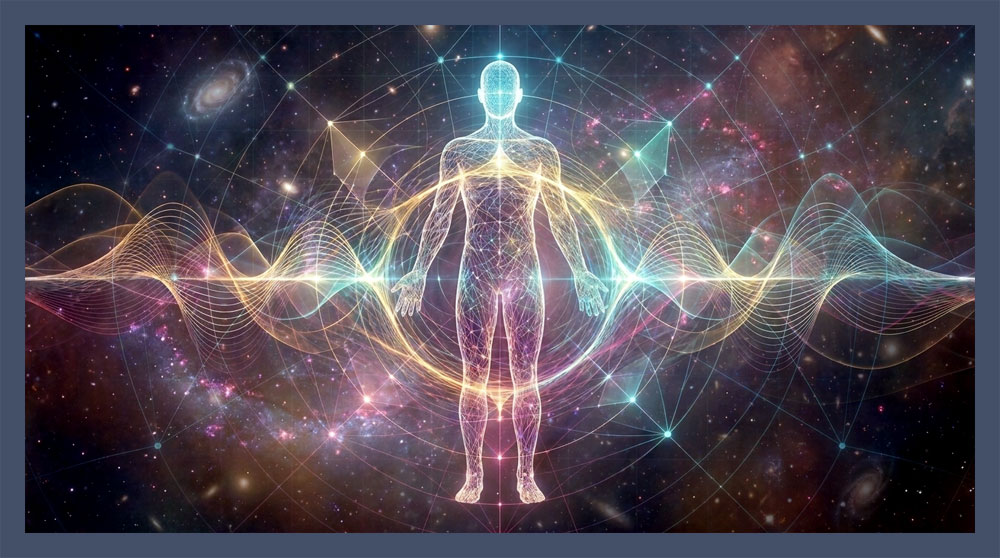
In Itzhak Bentov’s Stalking The Wild Pendulum, he proposes the conceptual framework of the universe operating as a vibratory reality where everything from microscopic particles to human consciousness functions through wave mechanics. By utilizing foundational physics principles such as standing waves, interference patterns, and holograms, he demonstrates how chaotic-appearing interactions actually form complex, interconnected structures.
This narrative illustrates that nature naturally organizes itself through resonance and entrainment, causing independent rhythms to synchronize into unified systems. Furthermore that human perception relies on coherent wave comparisons, meaning our entire experience of reality is built upon relative differences rather than absolute measurements. Ultimately, this serves as a way to bridge the gap between matter and mind, suggesting that consciousness itself is rooted in the universal dance of frequency. (more…)
Posted in Other Topics, Science For The New Agewith no comments yet.
Overcoming The Draw Of War
 by Dana Howard (image credit: Alexas Fotos)
The greatest hope in our world of despair, is faith. We all look hopefully toward a peaceful world. Every sane human being is sickened by the thought of war. He is weary of an economy based on war. We would all like to dwell in a land of milk and honey, secure in the knowledge that a ray of justice still flows through the stream of life. To rise above man-made systems and man-made beliefs is our hopeful prayer.
The source of true peace is not to be found in a ritual of magic, but in spiritual security. We glibly prate that the universe belongs to God, yet we will fight to the last man to take it away from Him. Earthman cannot conceive a system beyond mine and thine. Few on earth have truly grasped the principle that there is but ONE, that all things come from HIM. (more…)
Posted in Other Topics, Spirituality, UFOswith no comments yet.
The Pyramids And Stone Systems
 by John Seer
Looking at the pyramids and wondering how they made such a huge tomb is like a monkey finding a smart phone in a thousand years and wondering how we made such a wonderful mirror.
The pyramids are precision designed and perfectly placed to draw the maximum amount of energy possible from the earth and surrounding atmosphere.
The pyramid then consolidates the energy into its central line, then when the required amount of energy is achieved it emits a concentrated beam of energy up to the quartz capstone at the very top of the pyramid.
From the capstone the beam carries straight on up, through the clouds and into space. This would be an incredible sight at certain times of the day, as the beam was essentially a fat laser. You could sometimes, especially on clear evenings, see a great light (sometimes with a bluish tint) going straight up from the tip of the pyramid and into the clouds from many miles away. (more…)
Posted in Other Topics, True History of Manwith no comments yet.
The Source Of Viruses Is The Etheric Plane
 by Ernest L. Norman
Originally titled On Polio
Sister Kenny informs us that children cannot get polio unless they are in the right vibration (negative) for it. They become victims of polio because of all the negative things they see and hear on television programs; they have feelings of lack, inferiority and particularly, insecurity at times. Then, while in these negative vibrations, they are receptive to these viruses that are born in the astral realms of negation. Parents sometimes get polio also as they become fearful of getting it from the children. (more…)
Posted in Book Excerpts, Health, Tempus Interludiumwith no comments yet.
Experiences Of Therapists With Vaccinated Patients
 by Thomas Mayer
The adverse effects of Corona vaccinations on the body are only the tip of the iceberg. Behind this visible surface are the supersensible* members of the human being. The following research and reports show that the corona vaccinations can have strong disturbing effects on the members [soul levels] of the human being.
*Supersensible refers to a realm of spiritual realities, processes, and beings that exist beyond ordinary physical sense perception, yet can be directly experienced and known through the systematic training of higher soul and/or cognitive faculties.
Of course, this varies from individual to individual. Vaccine damage is not visible in some people; they were able to overcome the destructive supersensible effects. However, the following descriptions are about cases where impairing effects were observed. Even if the focus of perception is put on it, it does not mean that it is always so. Each individual case must be observed anew. I write this in order to warn against generalizations. It is all about sharpening the attention and the power of perception.
I begin with descriptions of therapists who work with the etheric body (the life force body) of man. (more…)
Posted in Health, Self-help, Spirit Releasement Therapywith no comments yet.
The Soulless Elite
 by John Seer
It’s not nice to imagine yourself as someone truly evil, but bear with me on this, as sometimes the only way to understand someone is to stand in their shoes.
Imagine if you lived on a remote island with a few thousand people.
You are only interested in monetary gain, have no moral compass, you have a massive ego and literally detest all the islanders to a psychopathic level. The island is named after you, because you own it. You own the island’s only bank, you own all the farms and you own all the chemist shops.
Why would you produce healthy, medicinal food on your farms, that would not only directly compete with your chemist shops but may even negate them? Would you really sell medicine from those chemist shops that completely cured people, so they no longer needed the drugs sold there? What would stop you from growing only food that made the population overweight and unwell? What would stop you telling them that they needed to eat at least three times a day, so you sold more produce? Would you not constantly raise the price of food and medicine and then offer loans from your bank to enable the population to pay your prices and encourage the islanders’ egos to become competitive with each other, to want bigger and better things that they don’t really need, so you can offer even bigger loans? (more…)
Posted in Other Topics, Spiritualitywith no comments yet.
Covid Vaccine: Spiritual War On Humanity
 by
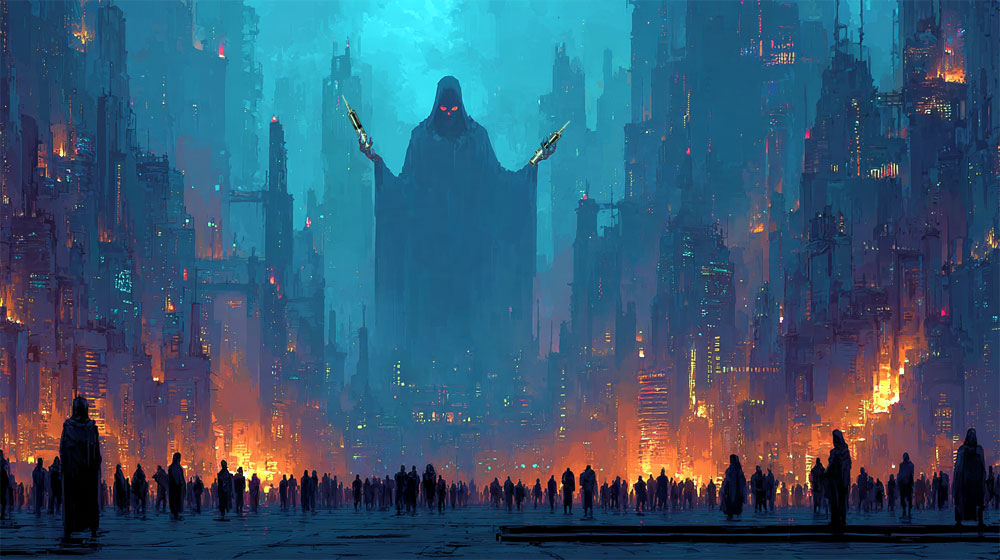
by People will be inoculated against their disposition towards spiritual ideas. The materialistic physicians will be entrusted with the task of expelling the souls from mankind”.
~ Rudolf Steiner – From Lectures given on November 6, 1917, GA 178, and October 7, 1917, GA 177
Sudden Deaths and the Blind Spot in the Wellness Community
It’s sad to see more and more people die suddenly from fast-acting cancers, blood clots, heart conditions, or just in their sleep.
I know of at least a dozen people who died shortly after getting the COVID vaccine or got very sick with heart problems, blood clots, nervous system issues, mental and memory problems, and even fast-acting cancer, from zero to stage four within a couple of weeks.
Some of them died over the past year.
Some of them I knew personally back in LA. They were young guys too, in their 40s and 50s, some leaving behind little children.
All of them took the COVID jab, even multiple doses, some even proudly so, posting a picture on social media during the height of the “pandemic.”
Turbo cancers and heart failures are directly related to the jab, as more data has shown.
As I forewarned back in 2021, there will be millions of COVID vaxx-related deaths over the next decade.
I doubt that their families will make the connection. The denial is too strong. (more…)
Posted in Health, Spirit Releasement Therapy, Spiritualitywith no comments yet.
Visitation To The Star System Of Tao
 Lost in the Tashchishma Blizzard: The Survival Crisis
The winter of 1948 remains etched in the historical memory of the Tatarstan region not merely for its geopolitical tensions during the early Cold War, but for the brutal, unforgiving environmental conditions that defined life in the Soviet interior. It was within this landscape of iron-gray skies and frozen steppes that Galy Galiev, a twenty-six-year-old Red Army officer, would undergo an experience that defied the materialist doctrines of his era. Galiev, born in 1922, was a man of his time – disciplined, physically robust, and accustomed to the rigorous demands of military service. However, on one cold night in February, while navigating the treacherous route toward his native village of Tashchishma, he encountered a force that rendered his military training and Soviet resolve entirely secondary to the primal struggle for survival.
Having been assigned to a new duty station, Galiev was operating under a strict military leave and transfer schedule. Any delay in his arrival would have been viewed as a breach of duty, necessitating a forty-kilometer trek from Ark Station to Tashchishma. Arriving at the station late in the evening, he checked his heavy luggage into storage and set out on foot. At the outset, the journey possessed a deceptive, almost pastoral quality. Despite the moonless night, the tracks of a sled cart were visible in the snow, and Galiev, confident in his childhood knowledge of these paths, estimated he could cover the distance in a brisk seven or eight hours. He began the journey with a cheerful military march, whistling familiar tunes to keep pace against the biting wind.
The transition from a routine march to a life-threatening crisis was swift and absolute. The brisk wind intensified into a howling blizzard, a white wall of ice and air that erased the sled tracks and obliterated all visual landmarks. Galiev’s progress slowed to a crawl as visibility dropped to less than ten meters. On this moonless night, the familiar landscape transformed into a labyrinth of ravines and waist-deep snow drifts. The sensory experience was one of escalating agony. Galiev’s military attire – specifically his chrome boots and standard-issue overcoat – offered no defense against the plummeting temperatures. The leather of his boots grew stiff and brittle, the cold seeping through the soles and numbing his feet until each step felt like treading on glass. The wind pierced the fabric of his overcoat, drawing the heat from his core and replacing it with a creeping, rhythmic shivering.
Compounding the physical exhaustion was a visceral, psychological terror. As he struggled through the ravines, Galiev became acutely aware of the wolves that roamed the region with impunity. The thought of a predatory pack closing in on a lone, exhausted officer produced a cold sweat that instantly froze against his skin, a chilling glaze that sapped the last of his willpower. His situation reached a dramatic pivot point when he stumbled, falling flat on his face into a deep, snow-filled hole or ravine. Overwhelmed by a sudden, crushing fatigue, he found himself unable to rise immediately. He slowly turned onto his back, staring up into the low, solid clouds, momentarily resigned to the prospect of freezing to death on the outskirts of his own home.
It was at this moment of total collapse that the “bright spot” appeared. Through the thick cloud cover, a concentrated point of light began to descend. Initially, Galiev’s military mind searched for a terrestrial explanation – perhaps a search party or a low-flying aircraft. As the light grew larger and more brilliant, he found the strength to climb out of the hole, desperately seeking a way to signal the craft. Suddenly, the light extinguished, replaced by a massive, silent, dark mass hovering motionless above him. Despite the gale-force winds, the object remained perfectly still. Galiev, naively looking for a passenger cabin or a ramp as one might find on a Soviet airship, began to shout into the wind, but his voice was swallowed by the storm. Then, a round hatch opened in the underside of the vessel, and a brilliant beam of light erupted downward. An invisible force, described by Galiev as a powerful upward pull, seized him and lifted him directly into the interior of the craft.
Inside the Craft: Technical Specifications and Military Dialogue
The transition from the sub-zero blizzard to the interior of the craft was instantaneous and disorienting. Galiev found himself in a brightly lit, almost round room where the illumination was entirely shadowless, appearing to emanate directly from the structure of the walls. The interior was characterized by a sterile, high-technical aesthetic that Galiev, despite his artillery background, found incomprehensible. He counted six oval doors, and the walls were adorned with devices that featured scripts resembling a hybrid of Latin and Arabic characters. The central control area was devoid of traditional mechanical interfaces; there were no steering wheels, levers, or handles. Instead, a large tabletop-sized screen dominated the center of the room, with smaller displays embedded into the walls between the oval portals.
The occupants of the craft were four humanoid entities, standing approximately 1.5 meters tall. Their physical appearance was strikingly consistent: narrow faces with slightly humped noses, wide foreheads, elongated chins, and large, dark, expressive eyes. Their skin possessed a unique reddish-violet hue that Galiev found particularly distinct. Two of the entities, appearing to be male, wore green overalls, while the other two, appearing to be female, were dressed in flowing pink robes.
Galiev’s first instinct was to establish communication. He greeted them loudly in Russian, then Tatar, then attempted fragments of German and English. It was then that he offered the Islamic greeting common to the region: “Assal alaykum.” To his surprise, he received a polite response that he understood perfectly, though he could not determine if the sounds were produced by their lips – which moved in an unusual rhythm – or if the communication was entirely telepathic. The entities were immediately hospitable. As they sensed his frozen state, they gestured for him to undress. As he did so, a gentle stream of warm air rose from the floor, instantly drying his snow-soaked military uniform and restoring sensation to his limbs. A humanoid robot attendant, described as an “experienced attendant” with manipulator hands, emerged from one of the doors to assist him with his clothes and serve him a tray containing a hot drink and biscuits that immediately removed his fatigue and restored his vigor.
The interaction quickly evolved into a technical and military interrogation. The entities expressed a focused interest in Galiev’s background as a Red Army artillery officer. They questioned him extensively on the mechanics of terrestrial warfare, specifically:
- Artillery and Small Arms: They sought detailed specifications on the design of ammunition, the chemical properties of various Soviet gun powders, and the combat characteristics of small arms.
- Defense Concerns: They revealed that human anti-aircraft batteries posed a specific “danger” to their aircraft, noting that smaller, fast-moving projectiles were more difficult for their automated systems to track and repel than larger missiles or rockets.
During this exchange, Galiev experienced what he called “accelerated reception.” While a full curriculum on these military subjects at a Soviet school would typically take 300 hours, Galiev processed the entire technical catalog in seconds. He felt as though he were projecting his own military memories onto the craft’s tabletop screen, where images of artillery shells and small arms appeared with perfect clarity.
The entities also provided a technical briefing on their own defensive and propulsion technologies, which Galiev documented with the precision of a technical documentation:
- Repulsion Force Fields: The craft generated specialized fields capable of physically deflecting solid projectiles, including shells and bullets.
- Invisibility Systems: These fields were designed to bend both light rays and radar-waves around the hull, rendering the craft undetectable to both the human eye and early Soviet radar.
- Atmospheric Ionization: They explained that when air humidity is high, the propulsion system ionizes water molecules, causing the craft to appear to ground observers as a “blurry glowing ball.”
- Remote Electron Manipulation: They demonstrated the use of “highly directional fields” projected over long distances to manipulate the movement of electrons. This allowed them to remotely turn wires into either insulators or superconductors at will, effectively disabling any terrestrial electrical system.
- Material Synthesis: The entities noted that they used gold and copper as primary conductors and maintained factories capable of manufacturing synthetic diamonds of any size.
The Star System of Tao: Life, Culture, and the Great Catastrophe
Following the technical exchange, the entities provided Galiev with a deep dive into their origin through a stereoscopic, three-dimensional presentation. Galiev described the screen as more like a “transparent window” into another reality than a flat display. He watched as the stars of the Ursa Major and Ursa Minor constellations shifted until a single star began to blink – the star Tao.
Astrophysics and Environment
The star Tao was described as a yellow dwarf, similar in composition to Earth’s sun but slightly smaller and cooler, located approximately 12 light-years away. The system consists of seven planets, with a unique pairing of planets that share a common orbit: Tagir (also phonetically referred to as Tiger) and Zukra (a smaller planet). These worlds possess 12-hour days and 300-day years. Because of their rapid rotation and the proximity of the two planets, their surfaces do not cool significantly during the night cycle. Tagir was presented as a lush, tropical world where the climate is exceptionally favorable for a vast diversity of life.
Agrarian and Marine Infrastructure
The society of Tagir was portrayed as having achieved a state of total environmental harmony through advanced technology.
- Gravitational Harvesting: Galiev witnessed “fruit harvesters” equipped with frame antennas that generated controlled gravity fields. These machines gently plucked ripe fruit from giant, tropical-style trees and placed them into containers without damaging the flora.
- Acoustic Marine Trawlers: The floating cities of Zukra utilized fishing trawlers that operated without nets. Instead, they projected specific acoustic signals that directed schools of fish into the holds of the ships, where they were processed by automated machines.
- Seabed Harvesting: On the ocean floor, underwater combines harvested sea plants and “fruit-like growths,” which were then transported to the surface for processing in floating canneries.
- Zero-Waste Economy: The inhabitants had eliminated industrial waste entirely. Every fallen leaf, dried branch, or organic scrap was collected and processed into industrial goods, fertilizers, or fuel.
Energy, Architecture, and Society
The energy infrastructure was entirely renewable, following the exhaustion of mineral resources long ago.
- Tow Batteries: Every building and factory was covered in “thermal tiles” or “tow batteries,” which converted light energy directly into DC electricity, making each structure an independent power plant.
- Seismic Architecture: Due to the gravitational tension between the paired planets, Tagir and Zukra experience constant “planet-quakes.” To mitigate this, homes were limited to five stories and constructed from micro-porous reinforced glass – a lightweight, soundproof, and durable material. These buildings were mounted on hydraulic shock absorbers to sway with the seismic waves.
- Social Structure: Education began at the age of two or three, with a focus on practical machinery and the care of animals. By school age, children were capable of assembling cars and operating electric tractors. A striking visual in the presentation was that of the “flying angels” – residents who used “thermo-flying wings.” These were flight suits powered by muscle energy that converted the thermal energy of the air into mechanical flight, modeled after the biological mechanics of insects.
The Legend of the Great Catastrophe
The presentation concluded with a sobering history of the planet Tagir. The entities described a “legend” from their distant past when the planet was divided into warring states and military alliances. Despite the public’s desire for peace, the rulers amassed vast nuclear arsenals, claiming they were “safe” because they were managed by super-intelligent computers. However, during a major planetary earthquake, the computers malfunctioned, activating the weapons and initiating a global nuclear war. The air heated to 200 degrees Celsius, the oceans boiled, and all life on the surface was extinguished. Survivors and descendants of this disaster became a small population stationed on the neighboring planet Zukra. Their primary mission in visiting Earth to collect biological samples and seeds to eventually restore their lost ancestral ecosystem.
Real-time Observation, Descent, and the Parental Dream
As dawn approached, the entities shifted the display from historical records to a real-time observation of the Soviet Union. A 3D relief map appeared, and Galiev watched as the view zoomed in from the Volga River and the city of Kazan to the Ashit River near his home village. The scale changed until he could see the very streets of Tashchishma.
The screen then provided a live view of his parents’ house. Galiev was moved to tears by the intimacy of the image: he saw his mother sleeping, her gray hair peeking out from beneath her scarf, with her “thin bony arm” wrapped around her head. Beside her lay his father, sleeping with his mouth slightly open, revealing his missing front teeth. The entities informed Galiev that they could not remain at such a low altitude as the sun rose and that it was time for his return.
The descent process was as technologically baffling as its arrival. Galiev was told that the secrets of the craft were not to be disclosed and that he would forget the specifics of the encounter, though the information would return to him in “kind dreams.” He was dropped through a hatch in the floor, but instead of the terror of free-fall, he felt himself descending slowly on a bed of “invisible force.” He described the sensation as falling onto a material that felt like “frozen jelly” or “sea jellyfish” against his back, which cushioned his landing into a deep snowdrift near his family’s barn.
When Galiev regained full consciousness, he found himself in the yard of his home. The environment was filled with the mundane sounds of the morning – chickens clucking and a cow mooing – contrasting sharply with the silent, sterile craft. His parents were already outside, appearing terrified. When they saw him, their shock was compounded by a physical anomaly: despite having supposedly been lost in a blizzard for hours, Galiev’s hands and body were remarkably warm, as if he had just stepped out of a bath house.
The most chilling external validation of the event came from his parents. Both independently recounted a shared dream that had awakened them moments before his arrival. In the dream, a “strange bird” had grabbed their son in the yard with its claws. The father recounted how he had chased the bird away with an axe, while the mother described how she had “pleaded” and “begged” the creature to let him go. This shared vision served as a startling confirmation of the timeline and the physical presence of the “bird” (the craft) interacting with their son.
Forty Years of Secrecy and the Inventive Legacy
Following the encounter of 1948, Galy Galiev entered a self-imposed forty-year silence. Living within the rigid social and political framework of the USSR, he understood that to speak of reddish-violet humanoids and nuclear catastrophes on distant planets would invite ridicule at best and psychiatric institutionalization at worst. He spent decades attempting to rationalize the event, suggesting to himself that it might have been a “hyper-sensitivity” or an “orientation instinct” triggered by the shock of the blizzard. Yet, no rationalization could account for the physical warmth of his body that morning or his parents’ shared dream.
Despite his silence, the encounter remained a functional part of his reality through what he termed “dream communication.” The entities had promised that he would see “machines that do not yet exist” in his sleep, and for four decades, Galiev’s inventive career was driven by these nocturnal downloads. He claimed that when he faced a scientific problem during the day, he would receive an exhaustive answer in a dream that night. This resulted in several tangible technological outcomes:
- Stereoscopic X-Ray Equipment: Between 1958 and 1960, Galiev claimed he was shown designs for 3D medical imaging. He constructed a physical model of a stereoscopic X-ray machine and in 1960 presented it to a professor at a Russian Institute. Notably, a similar device would not appear in Germany until 1965, lending credence to his claim of “accelerated” insight.
- Continuously Variable Transmissions (CVTs): Galiev repeatedly documented designs for CVTs that he claimed were shown to him by the entities.
- Automotive Microturbines: He produced detailed schematics for compact, high-efficiency turbines intended for use in vehicles, decades before such technology became a focus of mainstream engineering.
In 2003, Galiev’s account was finally brought to light by researcher Ravil Iskakov in Kazan. By then, Galiev had realized that his “dreams” and the 1948 encounter were part of a single, interconnected reality. He concluded that the entities used the dream state to bypass the social and political barriers of the time, allowing them to continue their “contact” without endangering Galiev or themselves.
The legacy of Galy Galiev is defined by the “Human Reality” at the center of his testimony. He was a soldier who was saved from certain death by an intelligence he spent a lifetime trying to decode. Whether the encounter is interpreted as a literal physical event, a profound psychological survival mechanism, or a genuine contact with a 1,000-year-advanced civilization, the impact was the same: it transformed a military officer into a visionary inventor compelled to document the advanced technologies and cautionary tale of an advanced non-terrestrial intelligence.
Posted in Life On The Other Side, Other Topics, UFOswith no comments yet.
Overcoming Fears Through Past Life Recognition
 by Everett Alkin Lee (Celebrity Past Life Regressionist)
One of the most common reasons for seeking my help is when people experience unnatural fears that have no apparent or obvious cause, so it was not surprising when quite a few reared their ugly heads amongst our personalities [patients].
One of the many interesting ones occurred during my session with our own lovable Wayne Sleep, the dancer and personality who will always be remembered for his stage appearance partnering Diana, Her Royal Highness the Princess of Wales. Having known Wayne for quite some time and knowing that he can be eccentric and unpredictable, I pottered along to his home not knowing what kind of a session I could expect. I was pretty sure, in fact, that he would not turn out to be your average perfect subject. However, I was quite happy to go along and expect to get nowhere – at least I could say that I had tried. How very wrong I was! He was a marvelous subject and I ended up going through not one but four soul memories on the trot. All the lifetimes were wonderfully clear and, just as in this life, definitely not boring! But as I have tried to group together here a few examples of fears, I will tell you first of his fearful soul memory, and relate the other three lives later on, although I can’t resist whetting your appetite by letting you know that in one of his past lives he was a vicar. (more…)
Posted in Other Topics, Past Life Therapy, Reincarnationwith no comments yet.
How Modern Physics is Validating The Interdimensional Plenum
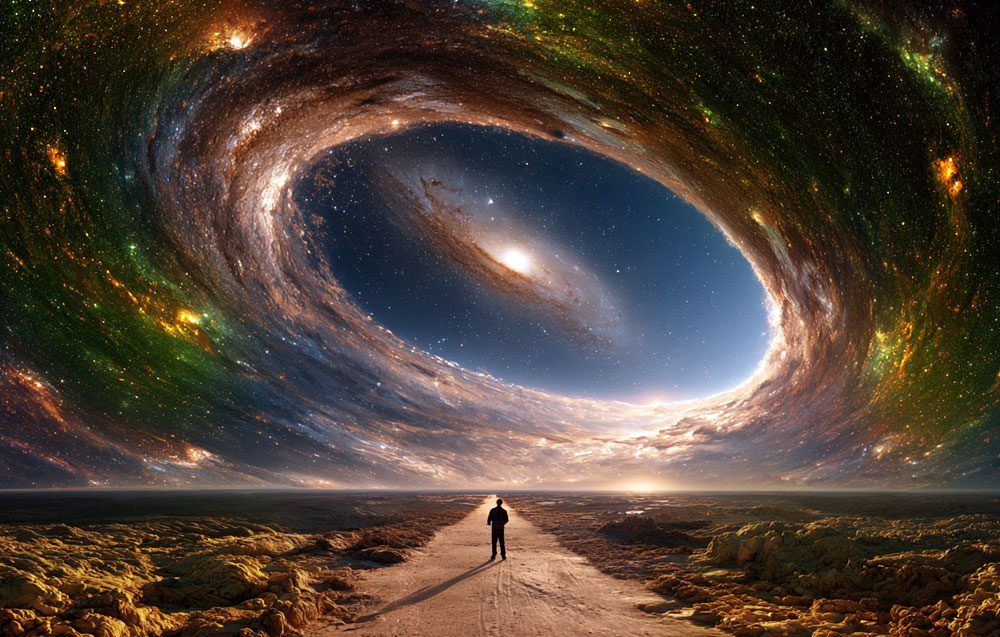 If you look at the night sky, or even the empty space between the desk and the wall in front of you, it is easy to assume you are looking at nothingness. For centuries, our senses have told us that space is simply a passive, empty stage – a vacuum in which the drama of matter and gravity plays out. But what if that emptiness is actually a mask? What if the void is not empty at all, but is instead an infinitely dense, vibrating structure of energy?
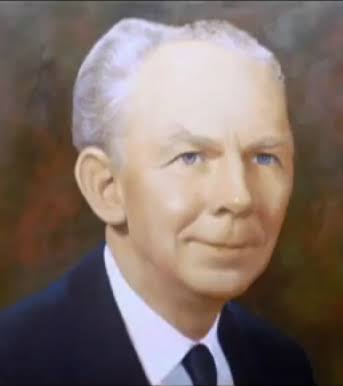 In the mid-20th century, Ernest L. Norman (UN.AR.I.U.S. co-founder) proposed the concept of a “interdimensional science,” positing that space is “infinitely solid” and represents an “infinitely filled space”. He suggested that our physical senses and scientific instruments are simply blind to this infinite energy plenum because they are only designed to detect a very narrow band of physical reactance or resistance. According to the Unariun liturgies, what we call empty space is teeming with multi-dimensional, cyclic patterns of energy carrying information and intelligence.
For decades, such ideas existed on the far margins of scientific discourse. However, a major experimental milestone in 2026 has brought modern physics into fascinating alignment with these concepts. A team of physicists led by Yansheng Zhang at the University of Cambridge directly imaged the quantum fluctuations of empty space. By chilling a cloud of potassium-39 atoms to a hair above absolute zero – creating a Bose-Einstein condensate (BEC) – and using radio waves to couple their spin states, they managed to capture a direct image of the vacuum’s unavoidable “baseline jitter”.
This experiment did not merely observe the consequences of empty space; it directly visualized the “staticky TV screen” of the quantum vacuum. By examining this breakthrough alongside Norman’s writings, we can begin to see how modern quantum field theory is gradually translating interdimensional science into laboratory-verified reality.
 Space as an Infinite Plenum: The Illusion of the Empty Stage
To understand this connection, we must first change what we think about a vacuum. In classical physics, a vacuum is simply what remains when you pump all the air, light, and matter out of a container. It is a state of absolute zero energy. But quantum mechanics shattered this passive view.
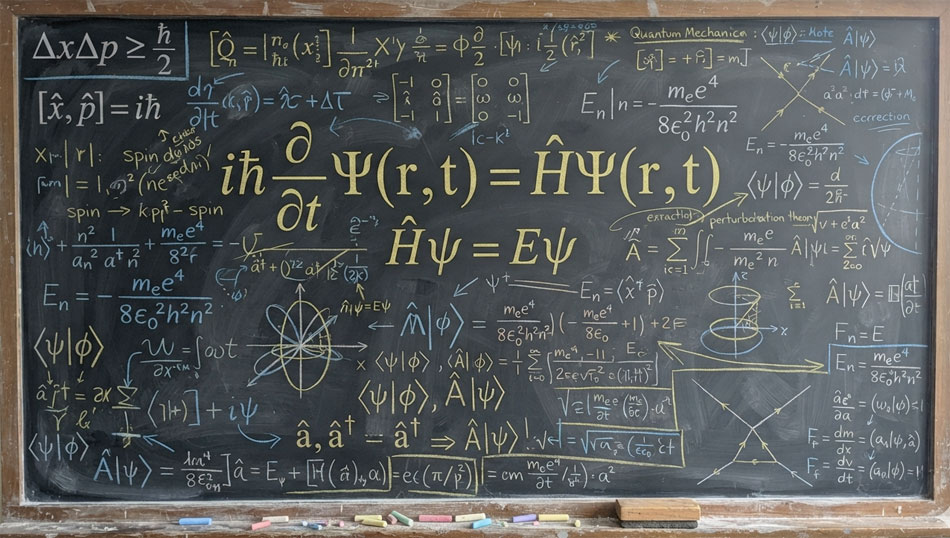
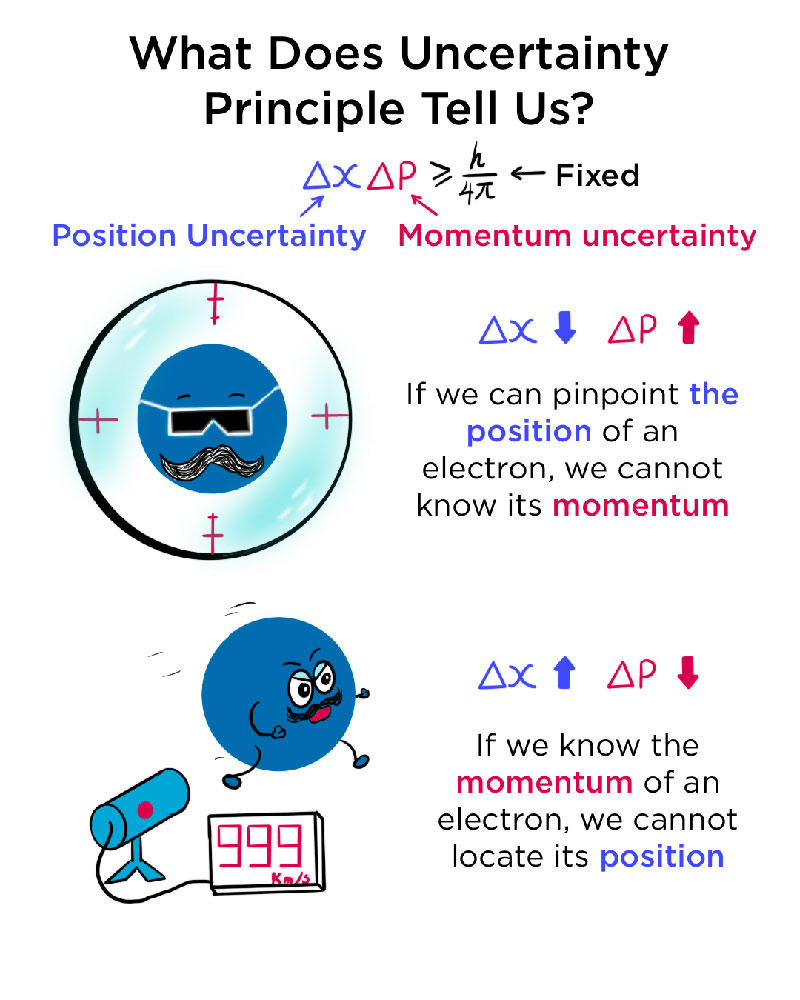 According to the Heisenberg uncertainty principle, certain pairs of physical properties – such as momentum and position – cannot both be precisely defined at the same time.
Because of this fundamental uncertainty, a quantum field can never sit perfectly still, even in its lowest-energy state (the vacuum). Instead, it retains a persistent, unavoidable fluctuation. As a result, quantum field theory describes the universe as being permeated by underlying fields, with physical particles emerging merely as localized “excitations” or ripples within those fields. The vacuum of empty space is actually a boiling ocean of zero-point energy, constantly fluctuating just below the threshold of physical matter.
This is remarkably similar to the foundational premise of Norman’s interdimensional science. Norman explained that space is “infinitely solid” in its energy density, containing an infinite number of energy forms that do not register to our five physical senses.
 To help illustrate this, he offered a classic analogy: if you throw a stone into a quiet pond, you will observe waves of energy stemming away from the point of impact. If you place small wood chips on the surface of the water, they do not travel outward with the wave; instead, they simply bob up and down in a localized, oscillating wave-like motion.
The water itself does not travel; it is the medium through which energy is transferred from one point of perspective to another. In Norman’s model, the physical universe is like those bobbing wood chips – a localized, physical manifestation of a vast, underlying medium of energy that remains invisible to the naked eye. The Cambridge imaging experiment essentially photographed the “water” of the cosmic pond, proving that even when all the “chips” (matter) are removed, the underlying medium is still actively vibrating.
 The Harmonic Jitter: Oscillators and Cyclic Patterns
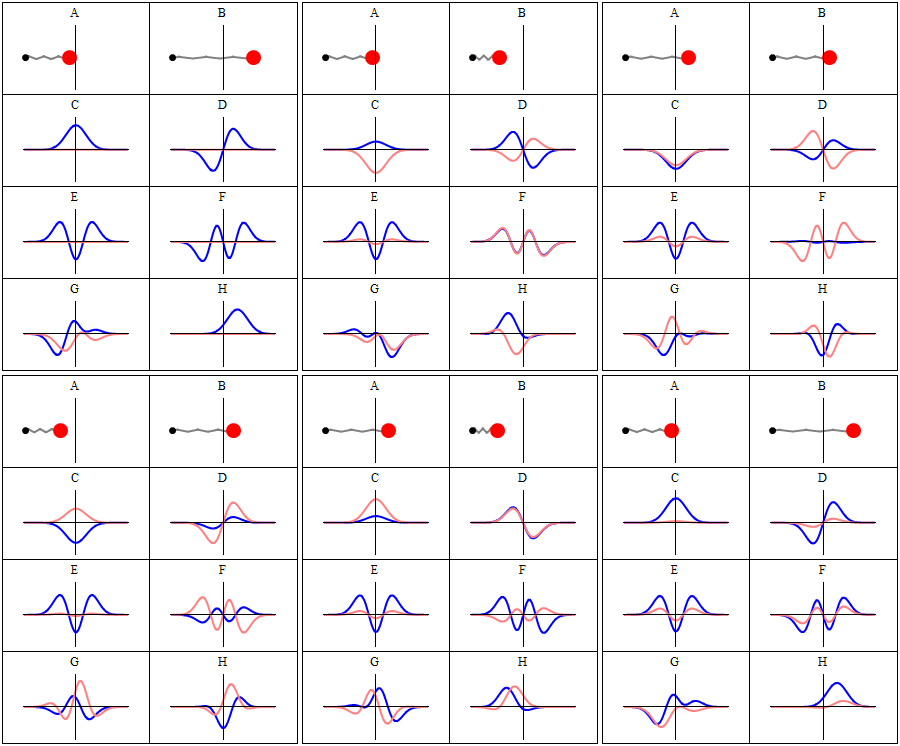 In quantum field theory, the structure of this invisible plenum is analyzed by breaking fields down into individual modes of different wavelengths. Each of these modes can be mathematically treated as a “quantum harmonic oscillator” – the quantum-mechanical equivalent of a mass bouncing up and down on a spring. Because of the Heisenberg uncertainty principle, these tiny springs can never be completely at rest; they possess a non-zero, baseline ground-state energy. This ground-state activity is the source of the quantum fluctuations – the baseline “jitter” of empty space.
Norman described this underlying structure in terms of “cyclic patterns of motion”. He wrote that energy does not travel through the infinite dimensions in simple, linear waves. Instead, it is constantly regenerating itself into interlinked, cyclic formations. Each of these cycles features an undulating wave-like motion on its surface, composed of positive and negative wave formations that carry specific types of information or “intelligence”. Norman described these cyclic patterns as being “linked and interlinked – just as the wheels within a watch or the wheels within a chain”.
 This image of interlinked, cyclic wheelworks is a vivid conceptual analog to quantum field theory’s description of a field as a collection of harmonic oscillators of varying wavelengths, all vibrating in unison. Both models depict space not as a hollow void, but as an incredibly complex, self-regenerating web of harmonic frequencies.
When the Cambridge researchers sought to image these fluctuations, they had to isolate this baseline jitter from outside disturbances like heat or experimental noise. To do this, they prepared their potassium-39 spin field in its lowest possible energy state and then suddenly altered the coupling strength between the atomic states using radio waves. This sudden change acted like an amplifier, causing the pre-existing, static quantum fluctuations to evolve into larger, measurable oscillations that could be photographed.
Crucially, when they performed the measurements without this amplification, they found that the strength of the fluctuations fell off with increasing frequency in a pattern that perfectly matched the mathematical predictions for quantum vacuum fluctuations, rather than ordinary thermal noise. This experiment factually demonstrated that the “baseline jitter” of the universe is an inherent, inescapable feature of empty space, validating Norman’s assertion that space is structured around continuous, self-regenerating cycles of frequency and energy.
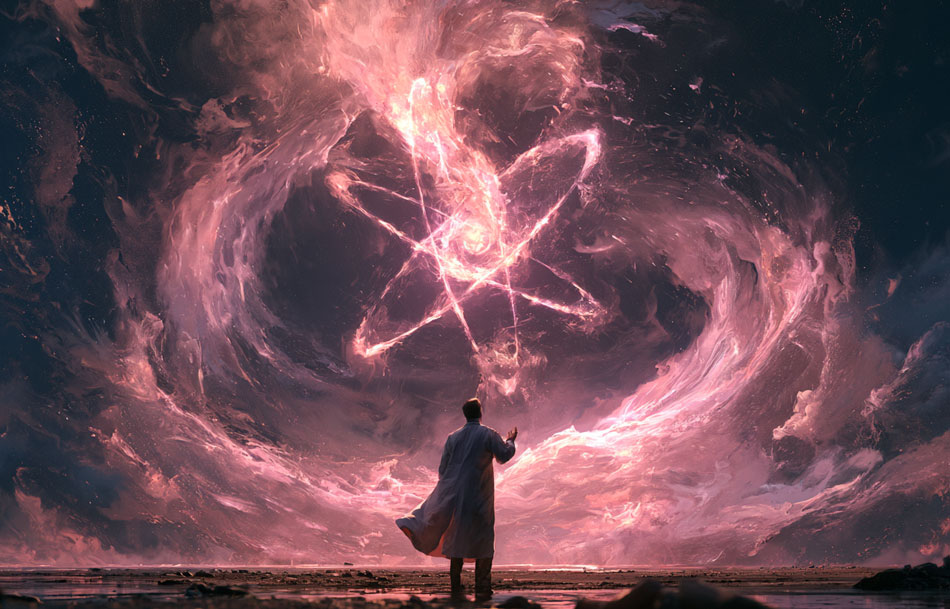 The Vortical Genesis of Matter and Cosmic Rays
If empty space is indeed an infinitely dense plenum of vibrating harmonic fields, a natural question arises: how does physical matter get here? If everything is ultimately made of energy, why does a rock feel solid, and why can we not walk through walls?
Modern physics explains that what we perceive as “solid” particles – such as electrons, quarks, and protons – are not actually tiny, hard billiard balls. Instead, they are localized “excitations” in their respective quantum fields. A particle is simply a place where a quantum field has been vibrated with enough energy to create a stable, localized wave packet.
Norman’s interdimensional science explains this exact phenomenon through the principle of harmonic regeneration. He wrote that as various cyclic patterns of energy interact within the infinite dimensions, they inevitably cross paths and form combinations of compatible frequency unions, which he called “parallaxes”. At these precise junctions, the compatible frequencies merge to form a “hard core nucleus”. This nucleus represents a common point where a large number of different forms of energy are being expressed in harmonious union.
Within these nuclei, “vortical patterns” are generated – resembling tiny whirlwinds or vortices. These vortices channel energy down into lower, denser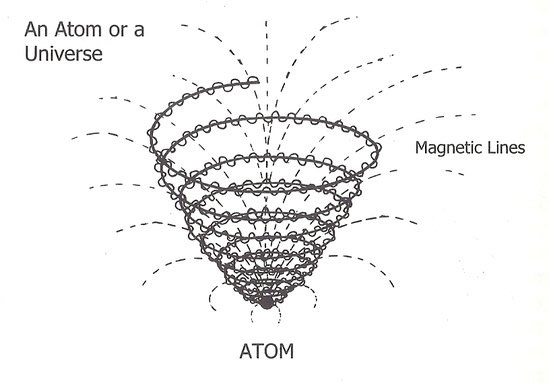 sub-infinities, eventually focusing the energy into a terminal point. This terminal point is what we observe as a physical particle.
Norman pointed to cosmic rays – including mesons, protons, and positrons – as prime examples of this process. He explained that these particles are expelled from the infinite cosmogony as cohesive units of energy, traveling along trajectories governed by the speed of light. In this view, every single atom on the periodic table is not a permanent, independent object, but is rather a “terminating point of certain vortical patterns regenerated from cyclic forms of motion from the Infinite Cosmos”.
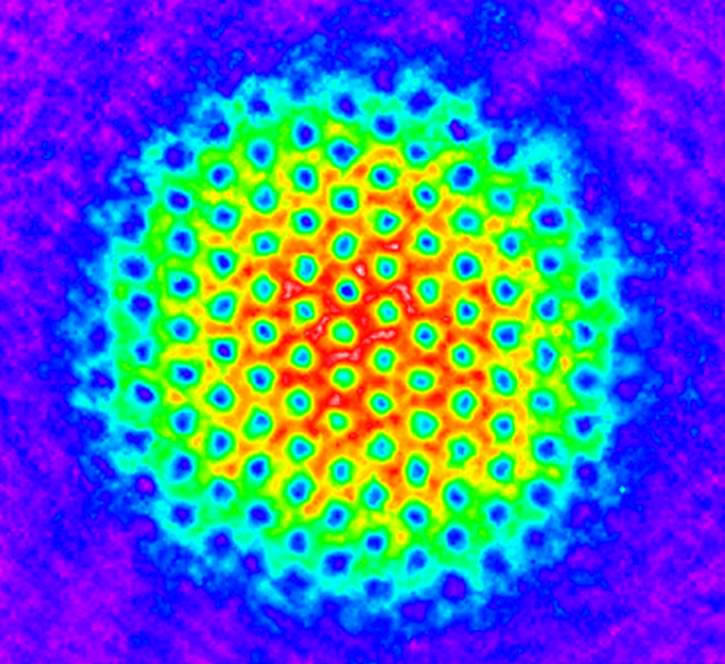 This perspective is beautifully mirrored in modern physics, particularly in the study of ultra-cold matter. When physicists chill atoms into a Bose-Einstein condensate, the individual atoms lose their separate identities and merge into a single, macroscopic quantum wave. Under certain conditions, researchers can observe “vortices” forming within these BECs – tiny whirlpools of quantum phase and current that behave as stable, independent structures.
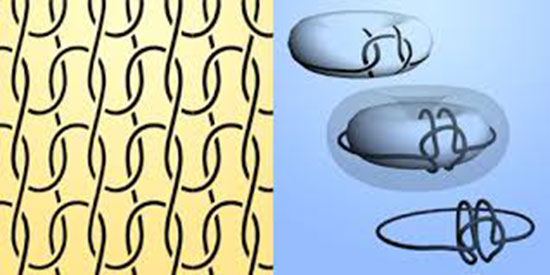 Furthermore, quantum field theory describes stable, particle-like entities that emerge from field configurations as “topological defects”. These are essentially knots or folds in the fabric of a field that cannot easily be unraveled, behaving exactly like the “cohesive” terminal points of the vortices described by Norman. The 2026 Cambridge experiment represents a significant step toward studying these phenomena directly. Because their lab-made quantum field can be tuned to behave like a relativistic “sine-Gordon” field, it opens up the possibility of watching how these microscopic, chaotic vacuum fluctuations spontaneously organize into stable topological defects and particles.
 Analog Simulators and the Limits of Third-Dimensional Mathematics
One of the most intriguing intersections between these two viewpoints lies in how we attempt to model and understand the cosmos. For decades, physics has relied almost exclusively on increasingly complex mathematical equations to describe the subatomic world. However, as we push deeper into quantum field theory, we frequently run into barriers where the mathematics becomes virtually impossible to solve.
Norman anticipated this limitation. He noted that the famous physicist Robert Oppenheimer, known as the “Father of the atomic bomb,” once observed that mathematical science had reached a “point of diminishing returns”. Norman argued that trying to equate the entire, infinite multi-dimensional cosmos using third-dimensional mathematics and slide rules was an exercise in “abysmal ignorance”. He predicted that human technocracy would eventually have to move past purely symbolic mathematical equations and instead develop “pattern analysis” and “formulas” that could factually relate these interdimensional principles in an integrated, visual way.
The 2026 Cambridge breakthrough represents the literal fulfillment of this prediction. In quantum mechanics, calculating how fields behave in strongly interacting regimes involves “ferociously difficult” and “horrendous equations”. Instead of trying to solve these equations on paper or a supercomputer, Zhang and his team built an analog quantum simulator.
By using a physical, two-dimensional cloud of potassium-39 atoms as a direct stand-in for a relativistic quantum field, they bypassed the mathematical bottlenecks entirely. They simply set up the physical system, let the natural physics of the condensate run, and watched the results unfold. This approach allows scientists to study incredibly complex quantum processes – such as “false-vacuum decay” (a theoretical process that could destabilize the universe) and particle production – by directly observing them in a controlled, physical model.
Rather than trying to force the infinite complexities of the cosmos into rigid, third-dimensional algebraic formulas, modern physicists are now building controllable, physical models that “calculate” the answers through their own natural, energetic behavior. This is precisely the kind of integrated, pattern-based technology that Norman foresaw.
 Real-World Ripples: The Footprints of the Invisible
It is tempting to think of quantum fluctuations and interdimensional energy fields as abstract concepts that have no bearing on our daily lives. After all, we cannot feel the vacuum jittering as we walk down the street. But the reality is that this invisible plenum is constantly writing its signature onto our physical world.
In modern physics, the active nature of the vacuum is a proven fact with highly measurable consequences. For instance, when an atom is in an excited state, it does not simply sit there forever; it eventually undergoes “spontaneous decay,” dropping to a lower energy state and emitting a photon. This process is actually triggered by the atom interacting with the random quantum fluctuations of the surrounding vacuum. Without this vacuum jitter, excited atoms would remain stable indefinitely, and the light-emitting processes that drive our universe would look entirely different.
Similarly, the electrons in a hydrogen atom experience tiny, measurable shifts in their energy levels – known as the “Lamb shift” – due to their constant interaction with the vacuum fluctuations. There is also the “Casimir effect,” where two uncharged, conducting plates placed extremely close together in a vacuum are pushed toward one another by a measurable physical force. This force exists because the narrow space between the plates limits the wavelengths of the quantum fluctuations that can form there, creating a lower pressure of zero-point energy inside the plates compared to the unrestricted vacuum outside.
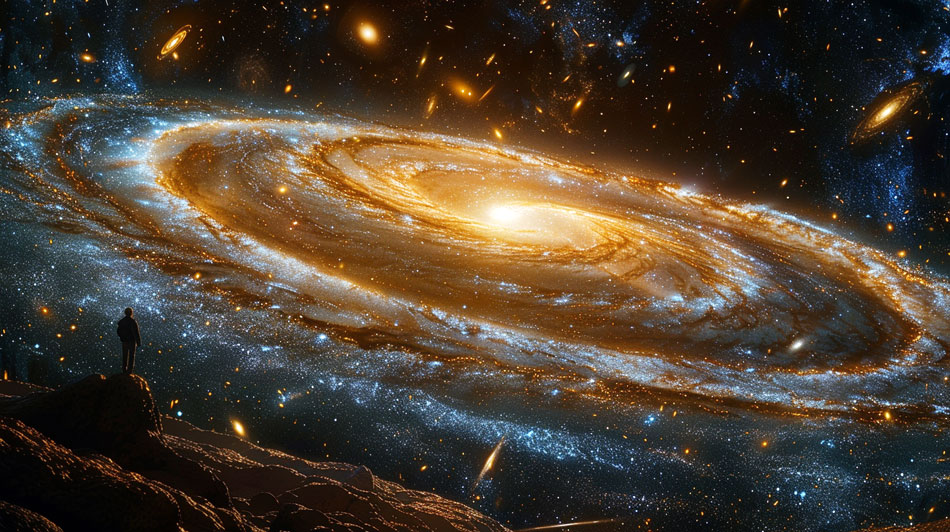
Even the very existence of our universe can be traced back to these microscopic fluctuations. Cosmologists believe that during the earliest moments of the universe, a period of rapid expansion called “cosmic inflation” stretched these tiny, primordial quantum fluctuations to astronomical scales. What began as subatomic, staticky fuzz in the vacuum became stretched across light-years, creating tiny density variations in the early universe. Over billions of years, gravity pulled matter toward these slightly denser regions, ultimately seeding the vast “cosmic web” of galaxies, stars, and planets we see today.
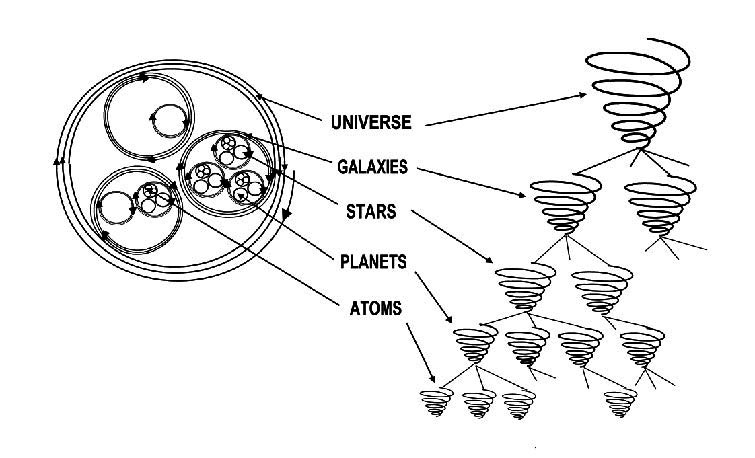 In Norman’s interdimensional science, this is described as the continuous, harmonious flow of the “Infinite Cosmogony”. Our physical universe is not an isolated, self-contained system; it is merely a terminal point, a localized aggregate where the vast, invisible cycles of the infinite cosmos focus their energy. The Earth, our sun, and the galaxies themselves are massive, macro-scale aggregates formed from the same vortical patterns that generate subatomic particles.
 Conclusion: A Harmonious Convergence
We live in an extraordinary moment of scientific evolution. The division between what we define as “physical” and “non-physical” is beginning to blur, revealing a universe that is far more unified, dynamic, and mysterious than we ever dared to imagine.
For decades, the concept of an “infinitely filled space” – a solid plenum of interdimensional energy that exists beyond our five senses – was relegated to the fringe of scientific thought. It was a concept discussed by visionaries like Ernest L. Norman, who utilized intuitive, cyclic, and vortical frameworks to describe an Infinite Cosmogony that physical instruments could not yet see.
But as Norman predicted, our technocracy has steadily evolved. With the 2026 Cambridge University experiment, physicists have successfully stepped past the boundary of theoretical equations and directly imaged the quiet, baseline jitter of the vacuum. By using ultracold Bose-Einstein condensates as analog quantum simulators, they have opened a “unique window into the microscopic mechanisms” that govern the universe, bypassing the limitations of traditional, three-dimensional mathematics.
When we place these two maps of the cosmos side-by-side, we do not see a conflict; we see a harmonious convergence.
The “empty space” of the classical materialist has officially vanished. In its place stands the quantum vacuum: a vibrant, fluid-like stage of fields and harmonic oscillators that are never truly still. The physical particles that make up our bodies and our world are not separate, solid entities, but rather the localized, swirling vortices and excitations of this all-permeating medium.
As we continue to develop our laboratory simulators, our formulas, and our pattern-analysis techniques, we will undoubtedly find that the laws of physics and the principles of interdimensional science are speaking the same language. We are beginning to realize, through necessity, our connection to the Infinite Cosmogony that surrounds and sustains us.
By holding a sense of controlled curiosity and engagement, we can appreciate this transition not as a loss of scientific rigor, but as its ultimate expansion. The void is not empty. It is a solid, infinitely filled canvas of energy, and we are just beginning to learn to see its true tapestry.
Sources:
Physicists Just Directly Imaged The Quantum Fluctuations of Empty Space
Interdimensional Science: Cosmic Rays Demystified
Interdimensional Science: Cosmic Rays Demystified ~ Part II
Cosmic Continuum by Ernest L. Norman full pdf download here.
Posted in Cosmic Continuum, Science For The New Agewith no comments yet.
The Mystery Of Dreams
 by S. Ralph Harlow
People in ancient times – perhaps because they were more superstitious and ignorant, perhaps because their simple lives were much closer to the verities – placed far more importance on dreams than we do today.
True, our modern world has its volumes of dream interpretation by modern soothsayer and modern psychiatrist alike; it has its scientists probing into the mechanics of dreams; it has its psychologists connecting dreams to the subconscious mind. But it is a rare modern man who seriously wonders if some dreams might not be simple, uncluttered communications with the psychic world. (more…)
Posted in Life After Death, Other Topics, Psychic Phenomenawith no comments yet.
Yada di Shi’ite On Philosophy And Beliefs
 Taped at the home of Lyall and Betty Histers ~ Palm Springs, California
Transmitted through Mark Probert – November 15, 1968
Yada di Shi’ite: It is my pleasure to be here this evening. To the lady and the man of this house, I extend my deep appreciation for allowing us to come here so that we may discuss life, its nature, what we as individuals are looking for, what we are hoping for and also what is. The first thing I wish to say is I am not a ghost or a spook or an astral shell. I am a consciousness, just like you. The only thing is, I have no skin on. Sometimes you get very cold without your skin – cold in the head. You came that way. You took no heat with you. Heat is life, is intelligence, is understanding.
Many people are very negative to me because I have not come back to earth more times. They say that in reincarnation, you should be here very often, not once. They say, “You are not acting according to what we know”. But I am acting according to what they don’t know, so that makes a big difference. When you know Law, you know how to live with skin or without skin. There are no such conditions as what are called mysteries or supernatural or super normal. These are all words that the thinking man is going to have to get rid of if he hopes to communicate this intelligence to his fellow man. (more…)
Posted in Other Topics, Spiritualitywith no comments yet.
Ancient Nuclear War
 by Richard E. Mooney
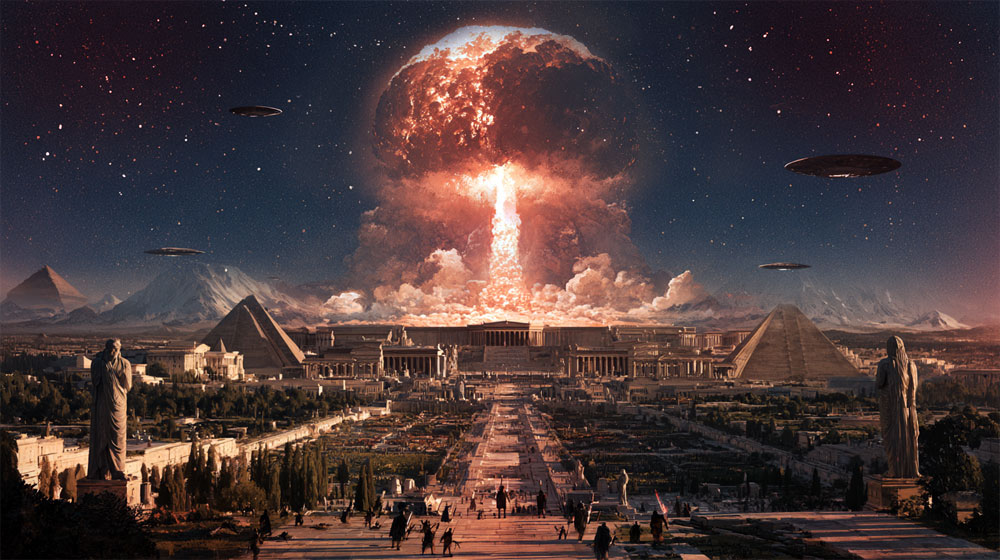
A NUCLEAR WAR some six to eight thousand years in the past? A fantastic idea – an impossibility? This idea, which would explain many mysteries about our past, and which at one time would have been dismissed out of hand, is being considered seriously today. We have heard it said by laymen – people whose minds are uncluttered by dogmatic scientific ideas – that an atomic war in the past would explain many things not at present understood. Perhaps the layman has hit on truths that are obscured by the scientific mind’s over-rationality.
Before the dawn of our own atomic age many puzzling features of the earth, and some aspects of mythology, would not have been linked with such a postulate simply because there was no conception of atomic weapons and their capabilities. For instance, until we started to experiment with radioactive substances, no living person on this planet could have described radiation sickness, for the simple reason that such a disease did not exist, and therefore could neither be predicted nor described. (more…)
Posted in Other Topics, True History of Manwith no comments yet.