
Ten Verified Near-Death Experiences Modern Science Can’t Explain
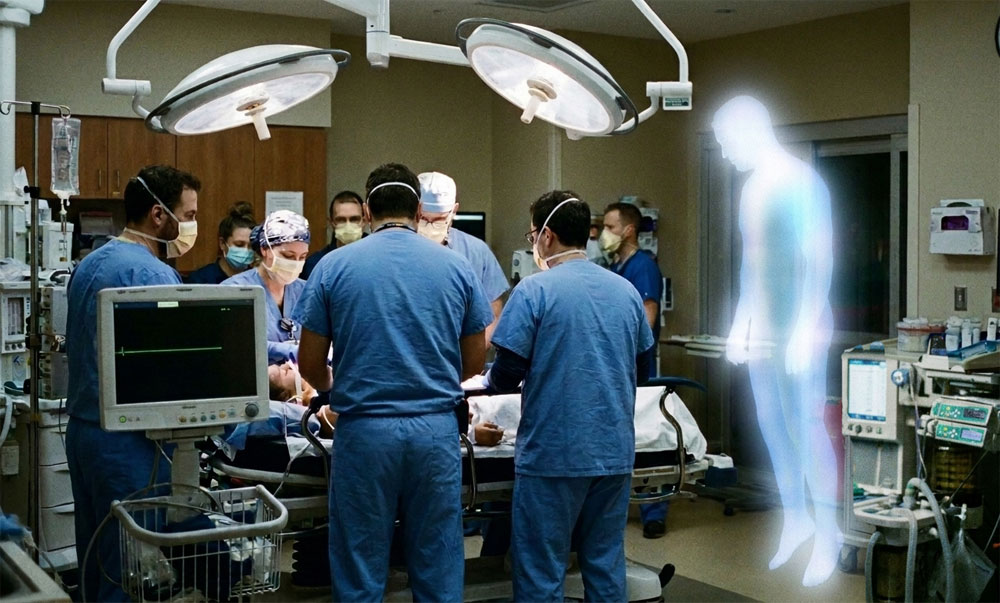 Introduction: The Edge of Consciousness
Standard neuroscientific models operate on a simple baseline: human consciousness is strictly generated by electrical and chemical activity in the physical brain. Under this conventional framework, when cardiac arrest or trauma starves the brain of blood and oxygen, subjective awareness should instantly dissolve into nothingness.
Yet, decades of clinical observations continue to present modern medicine with an unsettling paradox. Resuscitated patients routinely report structured, hyper-clear experiences occurring precisely while their brains were clinically inactive and their EEGs were completely flat.
Most critically, a significant number of these individuals return with accurate, verifiable details from the real world acquired during clinical death. These cases force science to confront a fundamental dilemma: is consciousness merely a localized biological product, or does it exist independently of the physical brain?
Takeaway 1: The Third-Floor Blue Shoe (Maria’s Out-of-Body Observation)
To understand how conscious awareness might operate outside the biological body, researchers often look to out-of-body observations recorded during emergency resuscitation. In 1977, a patient named Maria suffered a severe cardiac arrest at Harborview Medical Center in Seattle. While medical staff fought to stabilize her, Maria experienced an out-of-body perspective, floating entirely outside the hospital building where she spotted a single shoe resting on a third-floor window ledge.
After her resuscitation, Maria described the object to social worker Kimberly Clark Sharp, who searched the exterior ledge and discovered the shoe exactly as described:
- Color: Dark blue
- Wear: The little toe area was worn through
- Details: One lace was tucked under the heel
From a scientific standpoint, this case rigorously rules out prior knowledge or simple guessing. Statistically, the odds of randomly guessing the exact floor, window, shoe color, specific toe wear pattern, and tucked lace simultaneously are virtually zero, and the shoe was physically impossible to see from inside her room or from ground level. The shoe itself was later donated to the University of Virginia’s Division of Perceptual Studies, where it remains an unexplainable physical artifact.
Takeaway 2: The Crash Cart Denture Drawer (The Lancet Cardiac Arrest Study)
Building upon individual out-of-body observations, clinical studies have documented similar physical verifications under controlled medical settings. A landmark Dutch study led by cardiologist Dr. Pim van Lommel, published in The Lancet, examined 344 resuscitated cardiac arrest patients across ten hospitals. Every subject was clinically dead with zero heartbeat and no measurable brain function.
One key case involved a comatose man whose eyes had been taped shut during emergency CPR. During the resuscitation effort, a nurse removed his dentures and stored them in a specific drawer on a crash cart. Upon awakening from his coma a week later in a different room, the patient instantly recognized the nurse and accurately specified the exact crash cart and drawer where she had placed his teeth.
The popular “dying brain theory” posits that near-death experiences are simple hallucinations triggered by neural shut-down. However, hallucinations cannot record new, accurate real-world data from an environment observed while a patient possesses zero measurable brain activity.
Takeaway 3: Vision Without Eyes (Vicki Umipeg and Sight in the Blind)
If veridical observations challenge localized brain function, cases involving congenital sensory loss push the paradox even further. Vicki Umipeg was blind from birth, possessing eyes that had never functioned and a brain with no established pathways for visual processing. During an NDE following a severe accident, however, she reported clear visual perception of her resuscitation room.
Umipeg accurately described her own body on the operating table, the physical movements of attending doctors, and specific colors she had never physically seen before. Researchers meticulously verified her observations against actual events in the room, confirming that her accounts matched reality precisely.
Veridical Perception: Perceiving real, verifiable external objects or events without using the normal physical senses.
Her account is backed by broader clinical data. A dedicated study at the University of Virginia revealed that 80% of 31 studied blind individuals reported visual experiences during NDEs, demonstrating that lifelong blind subjects can perceive complex visual data precisely when their brain hardware is offline.
Takeaway 4: The Unseen Sister (Impossible Knowledge Cases)
Beyond external physical surroundings, near-death experiences frequently unlock verifiable data that existed completely outside the patient’s living awareness. During a cardiac arrest, a female patient entered a vivid realm where she encountered a young girl who introduced herself as her sister. The patient, who had been raised as an only child, recounted this unexpected meeting to her parents after being successfully revived.
Her parents turned pale and confessed a secret they had never revealed to anyone or documented in family photos: before the patient was born, they had a baby girl who died just days after birth.
Researchers at the University of Virginia designate these events as “impossible knowledge cases.” Because neurobiological hallucinations can only recombine pre-existing memories stored in the brain, they cannot spontaneously invent a real, deceased relative whose prior existence was completely unknown to the patient.
Takeaway 5: Instant Physical Healing (The Case of Anita Moorjani)
The profound impact of NDEs is not restricted to information retrieval; it can also manifest as radical, rapid biological transformation. In 2006, Anita Moorjani lay dying from stage 4 lymphoma, burdened with lemon-sized tumors, failing organs, and a prognosis of mere hours to live. After slipping into a deep coma and undergoing an intense NDE, her physical condition underwent a sudden, dramatic reversal.
Within days of waking from her coma, her tumors began shrinking, and within weeks, they vanished entirely. Her oncologist officially recorded the event as “spontaneous remission,” acknowledging that modern medicine had no mechanistic explanation for the speed and completeness of her recovery.
Dr. Pim van Lommel noted that NDE survivors frequently display measurable, permanent enhancements in immune function. In clinical practice, “spontaneous remission” functions merely as a descriptive label for an observed outcome rather than an actual scientific explanation.
Takeaway 6: The Neurosurgeon’s Destroyed Neo-Cortex (Dr. Eben Alexander)
When impossible knowledge coincides with severe biological brain destruction, standard neuroscientific escape hatches collapse entirely. Harvard-trained neurosurgeon Dr. Eben Alexander spent his career as an ardent NDE skeptic, maintaining that all such accounts were purely physiological hallucinations generated by failing neurons. That perspective changed permanently in 2008 when he contracted a severe bacterial meningitis infection that literally ate his neocortex.
Brain scans confirmed his neocortex was for all intents and purposes destroyed during a 7-day coma, ruling out standard physical hypotheses like hypoxia, DMT release, or REM intrusion – all of which strictly require a functioning neocortex. Yet, Alexander experienced an intense altered state accompanied by an unfamiliar woman, whom he later recognized from a photo as a biological sister he had been adopted away from and had never met before her death. This transformation turned a prominent medical skeptic into an active believer and advocate for non-local consciousness.
Takeaway 7: Contagious Consciousness (Shared Death Experiences)
The argument for non-local consciousness shifts from individual neurology to collective observation when healthy bystanders participate in the dying process. Documented extensively by Dr. Raymond Moody, Shared Death Experiences (SDEs) occur when healthy individuals at a dying person’s bedside are drawn into the transition. These bystanders report seeing the physical room change, witnessing brilliant light fill the space, or traveling down a tunnel alongside the dying patient.
Because multiple independent witnesses in the same room report identical anomalous events simultaneously, simple grief-induced hallucination fails as an explanation. Hallucinations are personal, subjective events that do not synchronize across separate brains.
Furthermore, physical explanations such as hypoxia or neurotransmitter floods apply exclusively to a dying organ. They offer zero explanatory power for a healthy bystander whose brain is functioning perfectly.
Takeaway 8: Flatlined Hearing and Sight (The Pam Reynolds Procedure)
The most thoroughly monitored test of perception under zero brain activity occurred during the 1991 hypothermic cardiac arrest surgery of Pam Reynolds. Her body temperature was lowered to 60°F, her heart was stopped, her blood was completely drained, her eyes were taped shut, and molded speakers continuously played loud audio clicks into her ears to monitor brainstem activity. Under every clinical standard, her brain waves were completely flat.
Despite molded ear speakers flooding her auditory canals with constant loud clicks, Reynolds vividly perceived external conversations and specific events in the room. She accurately described the surgical bone saw as resembling an electric toothbrush with interchangeable socket blades, detailed doctor conversations regarding her small femoral artery, and correctly identified “Hotel California” by the Eagles playing on the radio.
Takeaway 9: The Vividness Paradox (Hyperreality Under Flatlines)
Under normal biological conditions, memory encoding scales directly with brain performance; as brain function degrades due to trauma or oxygen loss, memories become fragmented and dim. Trying to remember what you had for lunch three days ago typically yields a fuzzy, imperfect recall despite being processed by a healthy brain. Near-death experiences present the exact opposite relationship, known as the “vividness paradox.”
Patients undergoing flatline EEGs and deep comas report structured, hyperreal memories that remain perfectly clear decades later. Standard cognitive neuroscience currently possesses no mechanism to explain how a brain experiencing zero electrical activity can encode memories that are vastly more permanent than those formed during active waking life.
Attempts to argue that these memories form immediately before or after clinical flatline fail to account for cases where patients record verified real-time events that occurred exclusively during the flatline window.
Takeaway 10: The Underground Shared Destination (The 1956 West Virginia Miners)
Shared environments during non-medical crises further suggest that NDE destinations represent real, external landscapes rather than individual brain misfires. Following a 1956 West Virginia coal mine collapse, eleven miners were trapped underground in absolute darkness for three days. When rescue teams finally reached them, six of the miners had survived.
To preserve scientific integrity, investigators interviewed each survivor completely separately without allowing communication between them. Remarkably, all six men gave identical accounts of losing consciousness: each described entering a vast, bright open field, sensing a warm, loving presence, and hearing the exact same voice tell them to return.
Standard physiological models attribute NDEs to random neural misfires caused by oxygen deprivation. However, just as crashing six separate computers will not yield identical error screens, six distinct brains misfiring randomly would not construct the exact same structured landscape and dialogue.
 Conclusion: The Gateway
While skeptical theories often dismiss near-death experiences as simple neural misfires, the empirical evidence tells a far more extraordinary story. When patients retrieve impossible knowledge about secret deceased relatives, observe facts from outside hospital walls, and report experiences that are “more real than real” during complete clinical death, the boundary between physical life and what lies beyond grows remarkably thin. These verified accounts challenge us to consider a radical possibility: that consciousness does not originate in the brain, nor does it die with it. Instead of viewing death as a terrifying ending, these cases invite us to see it as a doorway – a continuation of awareness, memory and spiritual perpetuity.
“If the brain is merely a receiver for consciousness rather than its creator, then the collapse of the physical body does not destroy the mind—it simply frees it.”

Related posts:



Posted in Life After Death, Near Death Experience, Other Topicswith no comments yet.
Leave a Reply