
How Modern Physics is Validating The Interdimensional Plenum
 If you look at the night sky, or even the empty space between the desk and the wall in front of you, it is easy to assume you are looking at nothingness. For centuries, our senses have told us that space is simply a passive, empty stage – a vacuum in which the drama of matter and gravity plays out. But what if that emptiness is actually a mask? What if the void is not empty at all, but is instead an infinitely dense, vibrating structure of energy?
 In the mid-20th century, Ernest L. Norman (UN.AR.I.U.S. co-founder) proposed the concept of a “interdimensional science,” positing that space is “infinitely solid” and represents an “infinitely filled space”. He suggested that our physical senses and scientific instruments are simply blind to this infinite energy plenum because they are only designed to detect a very narrow band of physical reactance or resistance. According to the Unariun liturgies, what we call empty space is teeming with multi-dimensional, cyclic patterns of energy carrying information and intelligence.
For decades, such ideas existed on the far margins of scientific discourse. However, a major experimental milestone in 2026 has brought modern physics into fascinating alignment with these concepts. A team of physicists led by Yansheng Zhang at the University of Cambridge directly imaged the quantum fluctuations of empty space. By chilling a cloud of potassium-39 atoms to a hair above absolute zero – creating a Bose-Einstein condensate (BEC) – and using radio waves to couple their spin states, they managed to capture a direct image of the vacuum’s unavoidable “baseline jitter”.
This experiment did not merely observe the consequences of empty space; it directly visualized the “staticky TV screen” of the quantum vacuum. By examining this breakthrough alongside Norman’s writings, we can begin to see how modern quantum field theory is gradually translating interdimensional science into laboratory-verified reality.
 Space as an Infinite Plenum: The Illusion of the Empty Stage
To understand this connection, we must first change what we think about a vacuum. In classical physics, a vacuum is simply what remains when you pump all the air, light, and matter out of a container. It is a state of absolute zero energy. But quantum mechanics shattered this passive view.
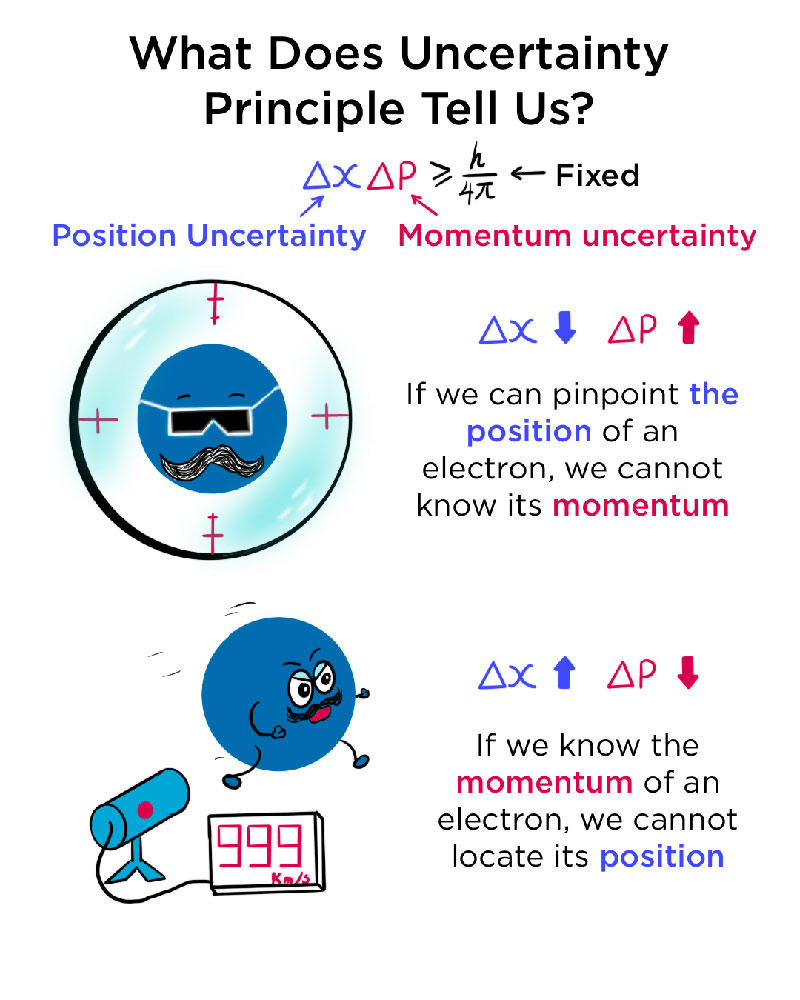 According to the Heisenberg uncertainty principle, certain pairs of physical properties – such as momentum and position – cannot both be precisely defined at the same time.
Because of this fundamental uncertainty, a quantum field can never sit perfectly still, even in its lowest-energy state (the vacuum). Instead, it retains a persistent, unavoidable fluctuation. As a result, quantum field theory describes the universe as being permeated by underlying fields, with physical particles emerging merely as localized “excitations” or ripples within those fields. The vacuum of empty space is actually a boiling ocean of zero-point energy, constantly fluctuating just below the threshold of physical matter.
This is remarkably similar to the foundational premise of Norman’s interdimensional science. Norman explained that space is “infinitely solid” in its energy density, containing an infinite number of energy forms that do not register to our five physical senses.
 To help illustrate this, he offered a classic analogy: if you throw a stone into a quiet pond, you will observe waves of energy stemming away from the point of impact. If you place small wood chips on the surface of the water, they do not travel outward with the wave; instead, they simply bob up and down in a localized, oscillating wave-like motion.
The water itself does not travel; it is the medium through which energy is transferred from one point of perspective to another. In Norman’s model, the physical universe is like those bobbing wood chips – a localized, physical manifestation of a vast, underlying medium of energy that remains invisible to the naked eye. The Cambridge imaging experiment essentially photographed the “water” of the cosmic pond, proving that even when all the “chips” (matter) are removed, the underlying medium is still actively vibrating.
 The Harmonic Jitter: Oscillators and Cyclic Patterns
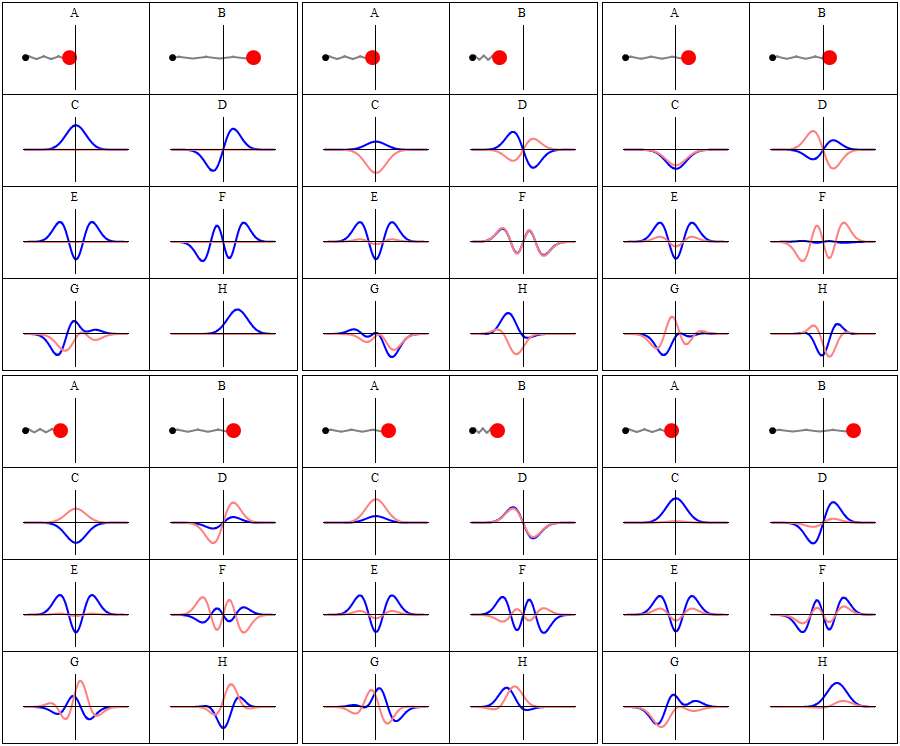 In quantum field theory, the structure of this invisible plenum is analyzed by breaking fields down into individual modes of different wavelengths. Each of these modes can be mathematically treated as a “quantum harmonic oscillator” – the quantum-mechanical equivalent of a mass bouncing up and down on a spring. Because of the Heisenberg uncertainty principle, these tiny springs can never be completely at rest; they possess a non-zero, baseline ground-state energy. This ground-state activity is the source of the quantum fluctuations – the baseline “jitter” of empty space.
Norman described this underlying structure in terms of “cyclic patterns of motion”. He wrote that energy does not travel through the infinite dimensions in simple, linear waves. Instead, it is constantly regenerating itself into interlinked, cyclic formations. Each of these cycles features an undulating wave-like motion on its surface, composed of positive and negative wave formations that carry specific types of information or “intelligence”. Norman described these cyclic patterns as being “linked and interlinked – just as the wheels within a watch or the wheels within a chain”.
 This image of interlinked, cyclic wheelworks is a vivid conceptual analog to quantum field theory’s description of a field as a collection of harmonic oscillators of varying wavelengths, all vibrating in unison. Both models depict space not as a hollow void, but as an incredibly complex, self-regenerating web of harmonic frequencies.
When the Cambridge researchers sought to image these fluctuations, they had to isolate this baseline jitter from outside disturbances like heat or experimental noise. To do this, they prepared their potassium-39 spin field in its lowest possible energy state and then suddenly altered the coupling strength between the atomic states using radio waves. This sudden change acted like an amplifier, causing the pre-existing, static quantum fluctuations to evolve into larger, measurable oscillations that could be photographed.
Crucially, when they performed the measurements without this amplification, they found that the strength of the fluctuations fell off with increasing frequency in a pattern that perfectly matched the mathematical predictions for quantum vacuum fluctuations, rather than ordinary thermal noise. This experiment factually demonstrated that the “baseline jitter” of the universe is an inherent, inescapable feature of empty space, validating Norman’s assertion that space is structured around continuous, self-regenerating cycles of frequency and energy.
 The Vortical Genesis of Matter and Cosmic Rays
If empty space is indeed an infinitely dense plenum of vibrating harmonic fields, a natural question arises: how does physical matter get here? If everything is ultimately made of energy, why does a rock feel solid, and why can we not walk through walls?
Modern physics explains that what we perceive as “solid” particles – such as electrons, quarks, and protons – are not actually tiny, hard billiard balls. Instead, they are localized “excitations” in their respective quantum fields. A particle is simply a place where a quantum field has been vibrated with enough energy to create a stable, localized wave packet.
Norman’s interdimensional science explains this exact phenomenon through the principle of harmonic regeneration. He wrote that as various cyclic patterns of energy interact within the infinite dimensions, they inevitably cross paths and form combinations of compatible frequency unions, which he called “parallaxes”. At these precise junctions, the compatible frequencies merge to form a “hard core nucleus”. This nucleus represents a common point where a large number of different forms of energy are being expressed in harmonious union.
Within these nuclei, “vortical patterns” are generated – resembling tiny whirlwinds or vortices. These vortices channel energy down into lower, denser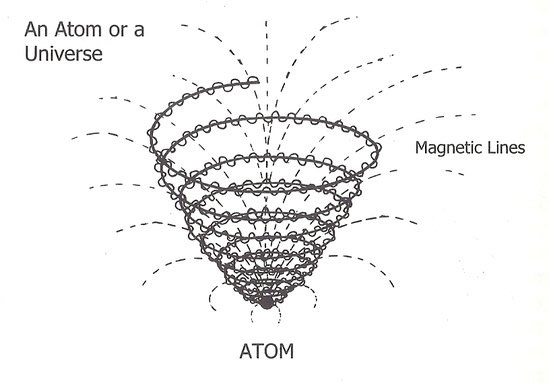 sub-infinities, eventually focusing the energy into a terminal point. This terminal point is what we observe as a physical particle.
Norman pointed to cosmic rays – including mesons, protons, and positrons – as prime examples of this process. He explained that these particles are expelled from the infinite cosmogony as cohesive units of energy, traveling along trajectories governed by the speed of light. In this view, every single atom on the periodic table is not a permanent, independent object, but is rather a “terminating point of certain vortical patterns regenerated from cyclic forms of motion from the Infinite Cosmos”.
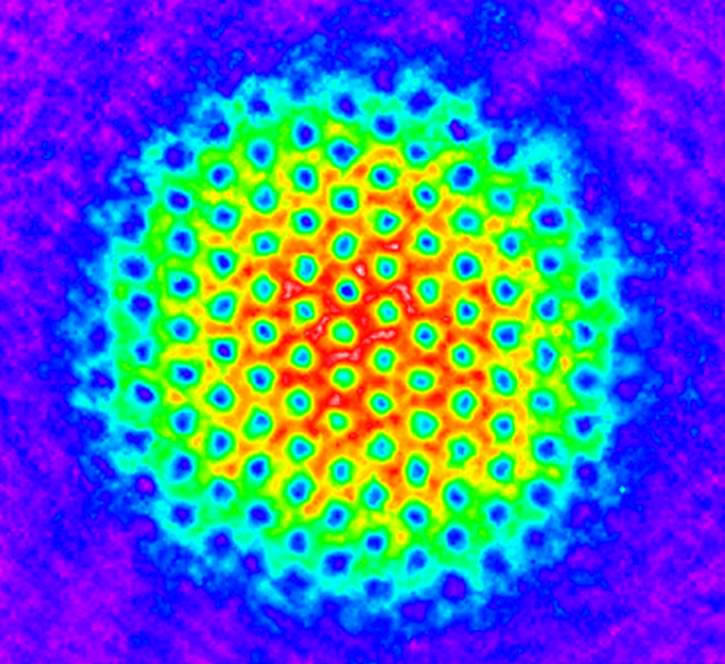 This perspective is beautifully mirrored in modern physics, particularly in the study of ultra-cold matter. When physicists chill atoms into a Bose-Einstein condensate, the individual atoms lose their separate identities and merge into a single, macroscopic quantum wave. Under certain conditions, researchers can observe “vortices” forming within these BECs – tiny whirlpools of quantum phase and current that behave as stable, independent structures.
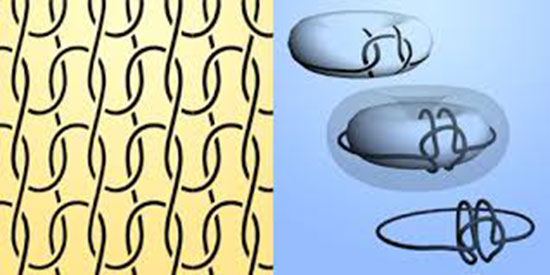 Furthermore, quantum field theory describes stable, particle-like entities that emerge from field configurations as “topological defects”. These are essentially knots or folds in the fabric of a field that cannot easily be unraveled, behaving exactly like the “cohesive” terminal points of the vortices described by Norman. The 2026 Cambridge experiment represents a significant step toward studying these phenomena directly. Because their lab-made quantum field can be tuned to behave like a relativistic “sine-Gordon” field, it opens up the possibility of watching how these microscopic, chaotic vacuum fluctuations spontaneously organize into stable topological defects and particles.
 Analog Simulators and the Limits of Third-Dimensional Mathematics
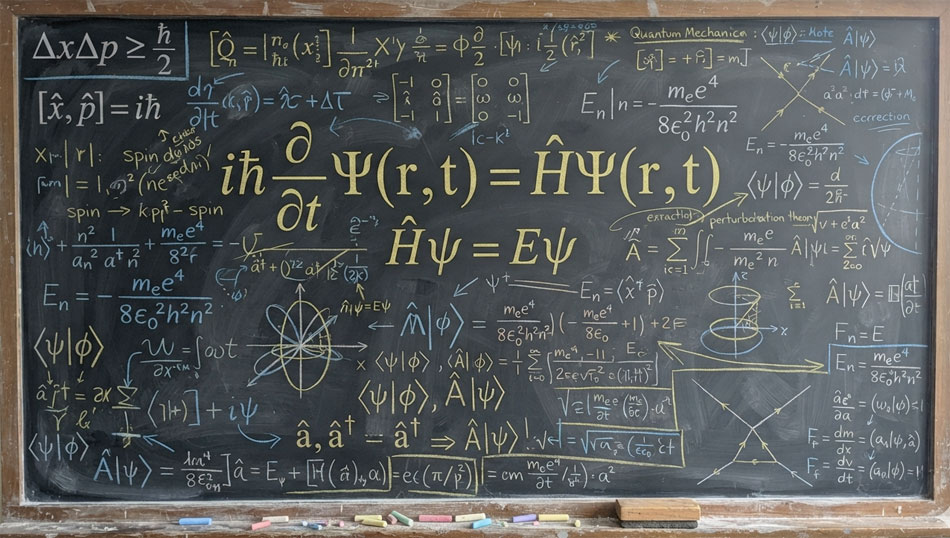
One of the most intriguing intersections between these two viewpoints lies in how we attempt to model and understand the cosmos. For decades, physics has relied almost exclusively on increasingly complex mathematical equations to describe the subatomic world. However, as we push deeper into quantum field theory, we frequently run into barriers where the mathematics becomes virtually impossible to solve.
Norman anticipated this limitation. He noted that the famous physicist Robert Oppenheimer, known as the “Father of the atomic bomb,” once observed that mathematical science had reached a “point of diminishing returns”. Norman argued that trying to equate the entire, infinite multi-dimensional cosmos using third-dimensional mathematics and slide rules was an exercise in “abysmal ignorance”. He predicted that human technocracy would eventually have to move past purely symbolic mathematical equations and instead develop “pattern analysis” and “formulas” that could factually relate these interdimensional principles in an integrated, visual way.
The 2026 Cambridge breakthrough represents the literal fulfillment of this prediction. In quantum mechanics, calculating how fields behave in strongly interacting regimes involves “ferociously difficult” and “horrendous equations”. Instead of trying to solve these equations on paper or a supercomputer, Zhang and his team built an analog quantum simulator.
By using a physical, two-dimensional cloud of potassium-39 atoms as a direct stand-in for a relativistic quantum field, they bypassed the mathematical bottlenecks entirely. They simply set up the physical system, let the natural physics of the condensate run, and watched the results unfold. This approach allows scientists to study incredibly complex quantum processes – such as “false-vacuum decay” (a theoretical process that could destabilize the universe) and particle production – by directly observing them in a controlled, physical model.
Rather than trying to force the infinite complexities of the cosmos into rigid, third-dimensional algebraic formulas, modern physicists are now building controllable, physical models that “calculate” the answers through their own natural, energetic behavior. This is precisely the kind of integrated, pattern-based technology that Norman foresaw.
 Real-World Ripples: The Footprints of the Invisible
It is tempting to think of quantum fluctuations and interdimensional energy fields as abstract concepts that have no bearing on our daily lives. After all, we cannot feel the vacuum jittering as we walk down the street. But the reality is that this invisible plenum is constantly writing its signature onto our physical world.
In modern physics, the active nature of the vacuum is a proven fact with highly measurable consequences. For instance, when an atom is in an excited state, it does not simply sit there forever; it eventually undergoes “spontaneous decay,” dropping to a lower energy state and emitting a photon. This process is actually triggered by the atom interacting with the random quantum fluctuations of the surrounding vacuum. Without this vacuum jitter, excited atoms would remain stable indefinitely, and the light-emitting processes that drive our universe would look entirely different.
Similarly, the electrons in a hydrogen atom experience tiny, measurable shifts in their energy levels – known as the “Lamb shift” – due to their constant interaction with the vacuum fluctuations. There is also the “Casimir effect,” where two uncharged, conducting plates placed extremely close together in a vacuum are pushed toward one another by a measurable physical force. This force exists because the narrow space between the plates limits the wavelengths of the quantum fluctuations that can form there, creating a lower pressure of zero-point energy inside the plates compared to the unrestricted vacuum outside.
Even the very existence of our universe can be traced back to these microscopic fluctuations. Cosmologists believe that during the earliest moments of the universe, a period of rapid expansion called “cosmic inflation” stretched these tiny, primordial quantum fluctuations to astronomical scales. What began as subatomic, staticky fuzz in the vacuum became stretched across light-years, creating tiny density variations in the early universe. Over billions of years, gravity pulled matter toward these slightly denser regions, ultimately seeding the vast “cosmic web” of galaxies, stars, and planets we see today.
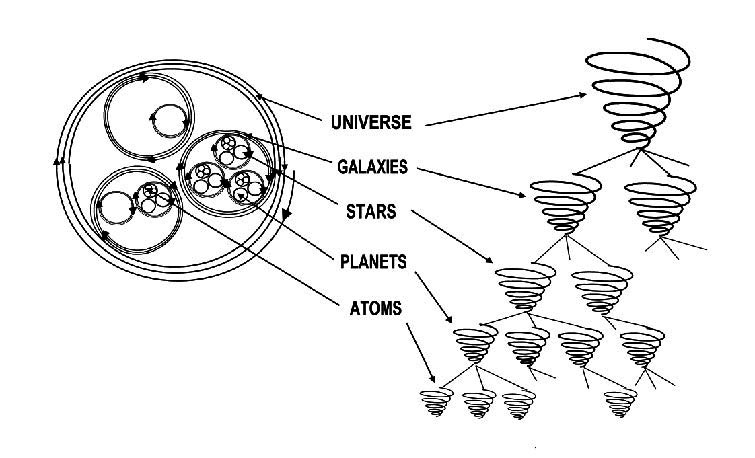 In Norman’s interdimensional science, this is described as the continuous, harmonious flow of the “Infinite Cosmogony”. Our physical universe is not an isolated, self-contained system; it is merely a terminal point, a localized aggregate where the vast, invisible cycles of the infinite cosmos focus their energy. The Earth, our sun, and the galaxies themselves are massive, macro-scale aggregates formed from the same vortical patterns that generate subatomic particles.
 Conclusion: A Harmonious Convergence
We live in an extraordinary moment of scientific evolution. The division between what we define as “physical” and “non-physical” is beginning to blur, revealing a universe that is far more unified, dynamic, and mysterious than we ever dared to imagine.
For decades, the concept of an “infinitely filled space” – a solid plenum of interdimensional energy that exists beyond our five senses – was relegated to the fringe of scientific thought. It was a concept discussed by visionaries like Ernest L. Norman, who utilized intuitive, cyclic, and vortical frameworks to describe an Infinite Cosmogony that physical instruments could not yet see.
But as Norman predicted, our technocracy has steadily evolved. With the 2026 Cambridge University experiment, physicists have successfully stepped past the boundary of theoretical equations and directly imaged the quiet, baseline jitter of the vacuum. By using ultracold Bose-Einstein condensates as analog quantum simulators, they have opened a “unique window into the microscopic mechanisms” that govern the universe, bypassing the limitations of traditional, three-dimensional mathematics.
When we place these two maps of the cosmos side-by-side, we do not see a conflict; we see a harmonious convergence.
The “empty space” of the classical materialist has officially vanished. In its place stands the quantum vacuum: a vibrant, fluid-like stage of fields and harmonic oscillators that are never truly still. The physical particles that make up our bodies and our world are not separate, solid entities, but rather the localized, swirling vortices and excitations of this all-permeating medium.
As we continue to develop our laboratory simulators, our formulas, and our pattern-analysis techniques, we will undoubtedly find that the laws of physics and the principles of interdimensional science are speaking the same language. We are beginning to realize, through necessity, our connection to the Infinite Cosmogony that surrounds and sustains us.
By holding a sense of controlled curiosity and engagement, we can appreciate this transition not as a loss of scientific rigor, but as its ultimate expansion. The void is not empty. It is a solid, infinitely filled canvas of energy, and we are just beginning to learn to see its true tapestry.
Sources:
Physicists Just Directly Imaged The Quantum Fluctuations of Empty Space
Interdimensional Science: Cosmic Rays Demystified
Interdimensional Science: Cosmic Rays Demystified ~ Part II
Cosmic Continuum by Ernest L. Norman full pdf download here.

Related posts:




Posted in Cosmic Continuum, Science For The New Agewith no comments yet.
Leave a Reply