Dr. Fred Alan Wolf earned a Ph.D. in theoretical physics from U.C.L.A. He continues to write, lectures throughout the world, and conducts research on the relationship of quantum physics to consciousness. He is the National Book Award Winning author of Taking the Quantum Leap and many other books including The Spiritual Universe. Dr. Wolf has taught at the University of London, the University of Paris, the Hahn-Meitner Institute for Nuclear Physics in Berlin, The Hebrew University of Jerusalem, and San Diego State University in the United States.
“ . . . the most important phenomena not dealt with by our physical theories are those of life and consciousness. … Even if the physical theories could completely describe the motions of the atoms in our bodies, they would not give a picture of the content of our consciousnesses, they would not tell us whether we experience pain or pleasure, whether we are thinking of prime numbers or of our granddaughters. This fact is, in my opinion,the most obvious but also the most convincing evidence that life and consciousness are outside the area of present day physics.” ~ Eugene Wigner, Nobelist
1)DNA May Appear Spontaneously From A Universal Quantum Wave Anywhere Or Any Place In The Universe
The DNA molecule is obviously essential to any scientific understanding of life and how it forms. One strand of DNA from a single cell contains enough information to clone an entire organism.
The new science tells us that DNA begins as a wave, not a molecule. This wave exists as a pattern within space and time and is written throughout the entire universe. In this new model, we are constantly surrounded by pulsating waves of invisible genetic information–much like satellite TV, radio waves, and cell phone and broadband Internet signals. Each of these tiny DNA-forming waves creates gravitional forces, on a microscopic scale, that pull in atoms and molecules from their surroundings to construct DNA. If we could develop instruments to see the, each of these waves would be an exact energetic replica of the DNA molecules they will eventually form. The atoms naturally “fall” into the right places as they are pulled into the wave–much like rocks naturally roll into the bottom of a mountain stream once they are swept into the current. After single DNA molecules have been built, these same microgravitational forces cause them to cluster together so they can begin integrating and creating larger forms of life.(more…)
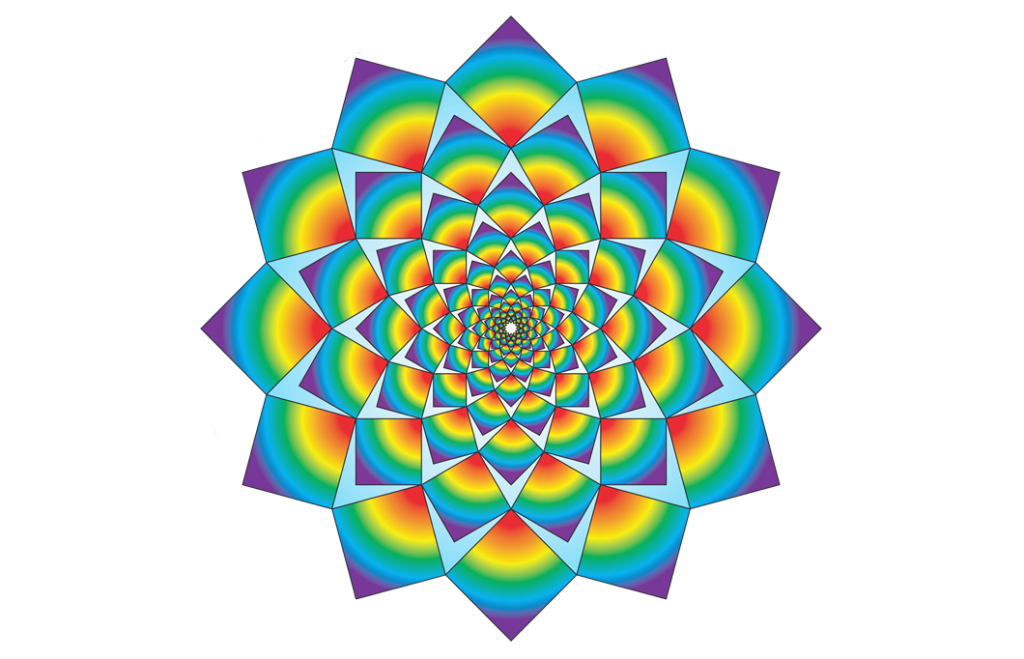
Sacred Geometry is a field of geometry distinct from “standard” geometry. Standard geometry (Euclidian geometry) is what is taught in our schools and adheres to the view of a disconnected universe. By comparison, sacred geometry adheres to the view of a connected universe, or unified field.
The connected universe view is summarized by Nassim Haramein:
The universe and all matter/energy it comprises behave as a unified whole system.
Analysis is through understanding the fundamental patterns of wholeness that are synergetically expressed in fractal repetition at all scales.
The information/energy interaction is holographic throughout.
The process of organization includes an inherent feedback/feedforward loop throughout the fractal and holographic matrix.
This feedback exhibits an ever-evolving reflexive “intelligence” throughout the entire micro to macro cosmic system, a “living universe”.
The direction of evolving systems includes a balance between both increasing and decreasing order.
The space “between” objects is full of a vast energy potential that seamlessly connects all things.
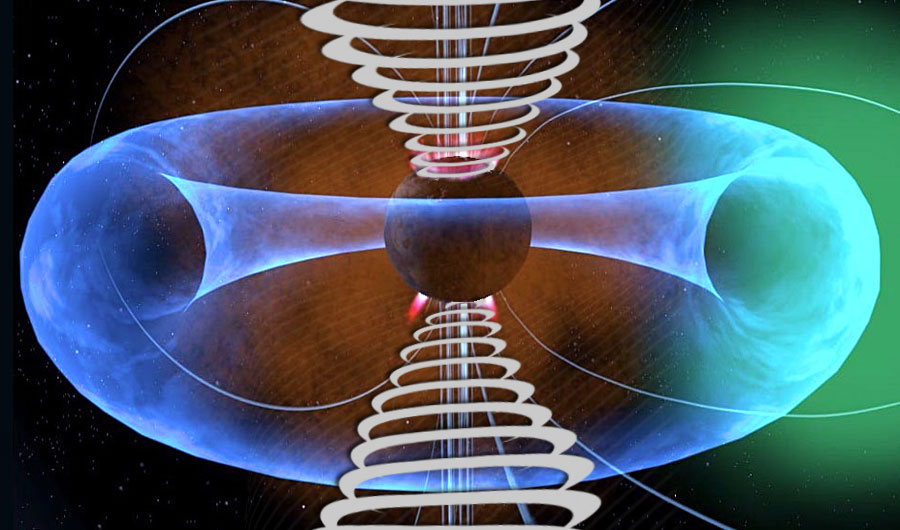
Scientists have recently discovered that black holes are believed to be threaded by helical magnetic fields. This theory is supported by evidence that the main driver of a black hole’s winds and jets are really the Lorentz force generated by these magnetic fields and their electric currents.
In order to understand what this really means, first what is the “Lorentz force”?
D-Wave Systems, Inc. is a quantum computing company, based in Burnaby, British Columbia, Canada. D-Wave is the first company in the world to sell quantum computers.
The D-Wave One was built on early prototypes such as D-Wave’s Orion Quantum Computer. The prototype was a 16-qubit quantum annealing processor, demonstrated on February 13, 2007 at the Computer History Museum in Mountain View, California. D-Wave demonstrated what they claimed to be a 28-qubit quantum annealing processor on November 12, 2007. In order to understand the origins of much of the controversy around the D-Wave approach, it is important to note that the origins of the D-Wave approach to quantum computation arose not from the conventional quantum information field, but from experimental condensed matter physics.
On May 11, 2011, D-Wave Systems announced D-Wave One, described as “the world’s first commercially available quantum computer”, operating on a 128-qubit chipset using quantum annealing (a general method for finding the global minimum of a function by a process using quantum fluctuations) to solve optimization problems. In May 2013, a collaboration between NASA, Google and the Universities Space Research Association (USRA) launched a Quantum Artificial Intelligence Lab based on the D-Wave Two 512-qubit quantum computer that would be used for research into machine learning, among other fields of study.(more…)
Time is a very confusing concept but it can easily be explained. Time is a agreement by everyone that a revolution of the Earth on its axis equals one day and that the revolution of the earth around the sun equals one year. If you were suddenly moved off planet to a point above the earth then there would be no reference as the sun is shining continuously so there would obviously be no daytime or nighttime. You could still use earth time as a reference but Einstein’s Theory of Relativity would also tell you that even when you returned to earth you would have aged more slowly. But even that too is an illusion and here is why.
Reality is merely an illusion, albeit a very persistent one. ~ Albert Einstein
What we think of as time is only consciousness or being aware. We interpret data – the information of the outside world like a film strip moving through a projector. It has picture and it has sound and we perceive it as ‘reality’. Each picture in the film strip lines up one after the other giving the illusion of movement and therefore time and space. We get the impression that we are moving forward in time when the only time there is really is the NOW time. What also seems to confirm this is when we are unconscious or asleep or not looking at a clock, we have no conception as to how much time has passed.(more…)
Figuring out the nature of the “real world” has obsessed scientists and philosophers for millennia. In the past few decades, however, major puzzles of mainstream science have forced a re-evaluation of the nature of the cosmos. Starting in the 1920’s, scientists found that some experiments’ results totally depended on whether anyone was watching. The observer critically influenced the outcome. Since then, paradoxes accompanying the Big Bang theory (how can an entire universe pop out of nothingness?), and other major, intractable problems of cosmology (e.g. what is this dark energy that seems to be blowing the universe apart) suggest that our models require a seismic shift.
At this pivotal point in science, medical doctor Robert Lanza and I believe a more accurate understanding of the “real world” will require combining astrophysics and biology instead of keeping them separate, and putting observers firmly into the equation. This view is called biocentrism.(more…)
Relativity, a theory formulated by Albert Einstein, means that all motion is defined relative to a frame of reference, and that space and time are relative, rather than absolute concepts.
What this means to me is that EVERYTHING IS RELATIVE and that space and time is an illusion because when one is in one space and time doesn’t mean that someone else is in that same space and time. What one sees from one perspective is not the same as what someone else sees from another perspective and isn’t that what life is all about anyway. Maybe what this means is that it is impossible for two people to have the same exact opinion at the same exact time so then what are we all fighting about? One day you might agree with this person, the next day you don’t. One day you might like chocolate ice cream, the next day you don’t. Does that mean that also your same religious viewpoints and/or opinions should also belong to everyone else? No! Of course not. Science proves that everything is relative.
Going back to space and time. Space-time forms the very basis of reality in which we live. We live in space-time. Ask any physicist and he will tell you we operate in a space-time continuum which is essentially a four-dimensional continuum having three spatial coordinates. So by this we could say we are fourth dimensional beings having a third dimensional experience which is exactly what UN.AR.I.U.S. explains in its liturgies.(more…)
No one else sees the world the way Jason Padgett does. Water pours from the faucet in crystalline patterns, numbers call to mind distinct geometric shapes, and intricate fractal patterns emerge from the leaves and branches of trees, revealing the intrinsic mathematical designs hidden in the objects around us.
Amazingly, Jason wasn’t born this way. Twelve years ago, he was a party-loving jock and a college dropout who’d never made it past pre-algebra. But a violent mugging permanently and profoundly altered the way his brain works, giving him unique gifts. His ability to understand math and physics skyrocketed. He’s now a devoted student and award-winning artist, hand-drawing the stunning geometric patterns he sees everywhere.
The first documented case of acquired savant syndrome with mathematical synesthesia, Jason is a medical marvel. Some researchers see his transformation as proof that every brain possesses stunning abilities only some people are able to consciously access.(more…)
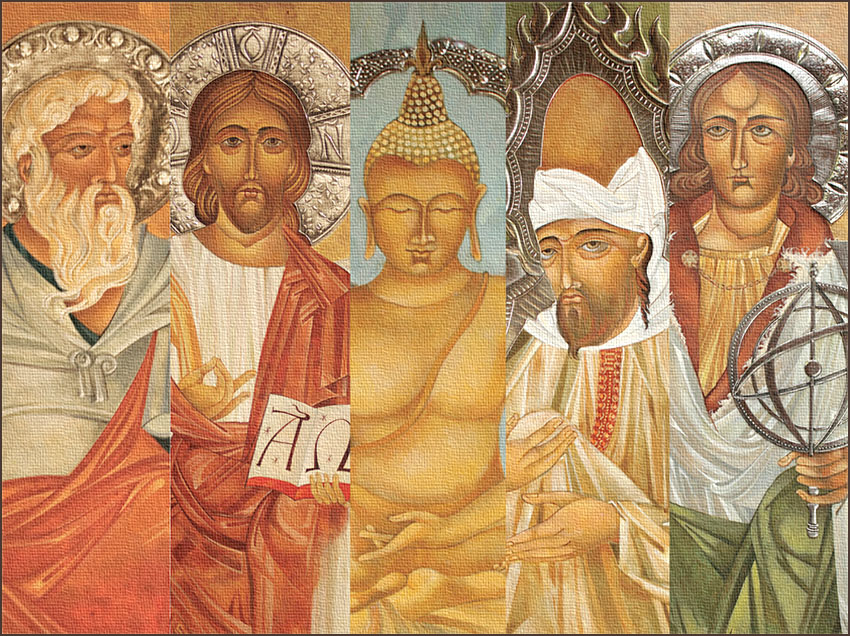
Most of us meet with the miraculous and magical in the tales of early childhood, and in those plastic years, before the “shades of the prison house” have begun to close around us, miracles are part of the accepted order. There is no incredibility, for example, in the magic power of Aladdin’s lamp, or in Jack’s beanstalk to the land of the giants, or in Christ walking over the storm-tossed water.
Such stories are not, of course, confined to the folklore and religious scriptures of the western world. The written chronicles of Man in all areas unroll a record of miracles that stretches from Lord Krishna, some 5,000 years ago, down to the present day. The Age of Miracles has always been with us. We read of its rosy morning on the far horizons of ancient Egypt, Chaldea, India and Palestine. And in the old Alexandria of the early Christian Era there were theurgists who at public ceremonies made statues “walk, talk and prophesy”.
In Europe during the Middle Ages the church unfortunately claimed a monopoly of the miraculous, and those who worked outside it had to work in secrecy. Such secular theurgical workers, belonging to the Rosicrucian and other brotherhoods of occult practice, did exist. However, and despite ecclesiastical power and jealousy, some great personalities – adepts like Paracelsus and the Comte de St. Germain – caught the attention of the public, stirring its cupidity, its fears and its suspicions.(more…)
Thomas Edison closely followed the alternative physics work of Albert Einstein and Max Planck, convincing him that there was an entire reality unseen by the human eye. This led to the last and least-known of all Edison’s inventions, the spirit phone. His former associate, now bitter rival, Nikola Tesla, was also developing at the same time a similar mysterious device.
Edison’s little-known near-death experience formed his theory that animate life forms don’t die, but rather change the nature of their composition. It is this foundational belief that drove him to proceed with the spirit phone.
Tesla monitored Edison’s paranormal work, with both men racing to create a device that picked up the frequencies of discarnate spirits, what today is called EVP (Electronic Voice Phenomenon).
Both men were way ahead of their time, delving into artificial intelligence and robotics.(more…)
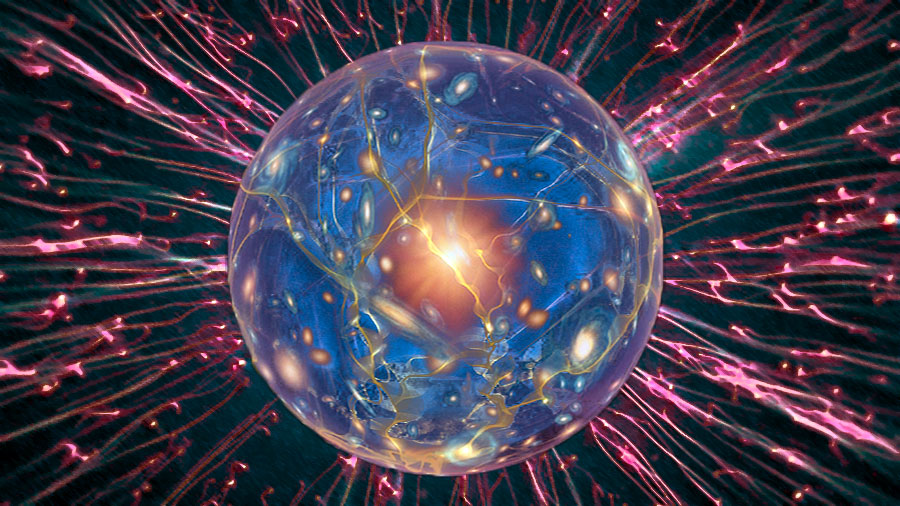
‘Space’ is aptly named because there sure is a lot of it! It is bigger than we can imagine and it is filled throughout with mostly dark mode plasma that is concentrated in regions of various dimensions, constituent elements and densities, all of which have positively and negatively charged regions within and around them.
It is truly hard to imagine the immense power that these vast regions have stored within them, untold numbers of which are millions of light years in size. Over time, these mostly invisible but now detectable super-galactic-sized clouds and more obvious formations of charged matter interact with each other and with regions of neutral matter (dust molecules and other gases) as well. This takes place through electrical and magnetic events that induce current flow within and throughout all their various forms. In turn, the gigantic currents produced generate further magnetic fields, which being dynamic in nature (i.e. continually moving and interacting), go on to induce additional current flow in adjoining regions, sheets and filaments of plasma.(more…)
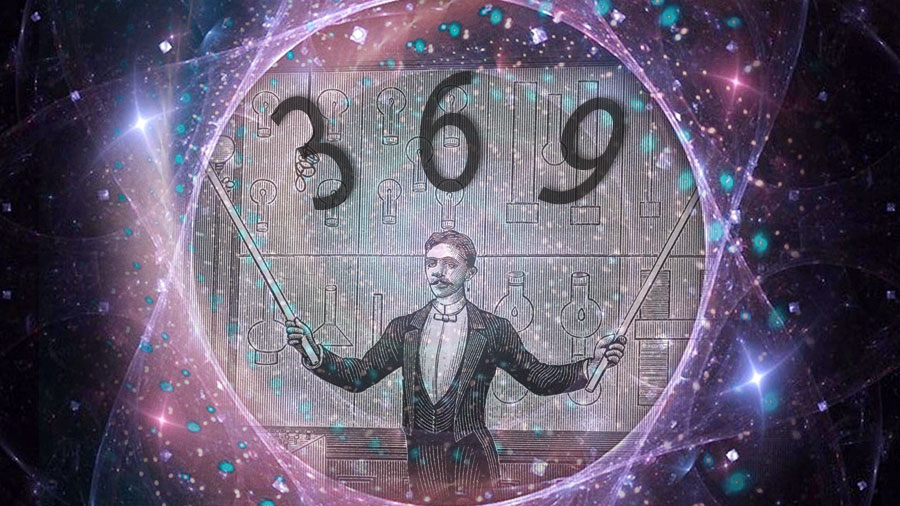
Nikola Tesla did countless mysterious experiments, but he was a whole other mystery on his own. Almost all genius minds have a certain obsession. Nikola Tesla had a pretty big one!
He was walking around a block repeatedly for three times before entering a building, he would clean his plates with 18 napkins, he lived in hotel rooms only with a number devisable by 3. He would make calculations about things in his immediate environment to make sure the result is devisable by 3 and base his choices upon the results. He would do everything in sets of 3.
Some say he had OCD, some say he was very superstitious.
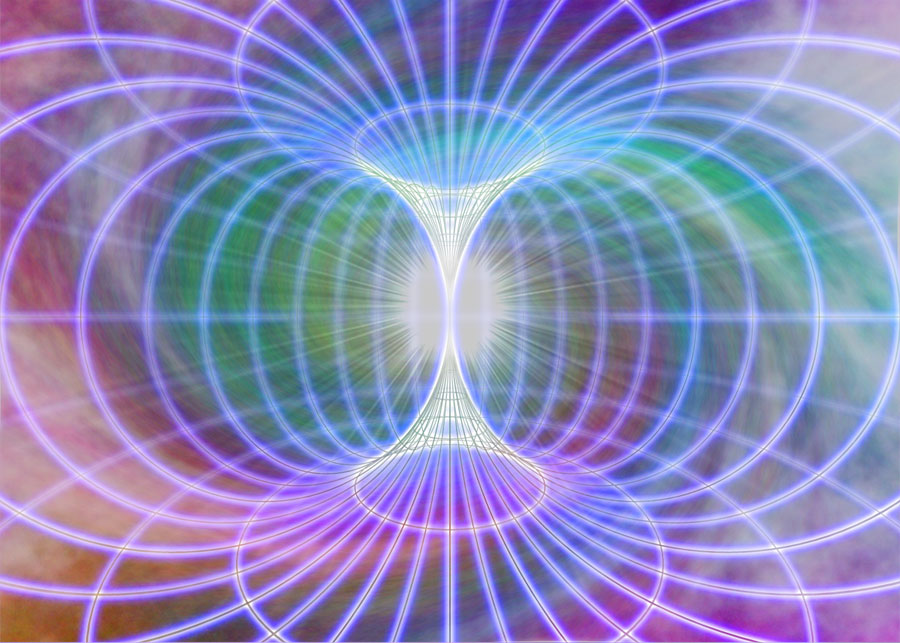
Whereas the Vector Equilibrium represents the ultimate stillness of energy, the Torus shows us how energy moves in its most balanced dynamic flow process. The important thing to understand about the torus is that it represents a process, not just a particular form.
A torus consists of a central axis with a vortex at both ends and a surrounding coherent field. Energy flows in one vortex, through the central axis, out the other vortex, and then wraps around itself to return to the first incoming vortex. The simplest description of its overall form is that of a donut, though it takes many different shapes, depending upon the medium in which it exists. For example, a smoke ring in air or a bubble ring in water are both very donut shaped. And yet an apple or an orange, which are both torus forms, are more overtly spherical. Plants and trees all display the same energy flow process, yet exhibit a wide variety of shapes and sizes. Hurricanes, tornadoes, magnetic fields around planets and stars, and whole galaxies themselves are all toroidal energy systems. Extending this observation of the consistent presence of this flow form into the quantum realm, we can postulate that atomic structures and systems are also made of the same dynamic form.(more…)
Your Life’s Memories Could, In Principle, Be Stored in the Universe’s Structure
By Franco Vazza & Alberto Feletti
Christof Koch, a leading researcher on consciousness and the human brain, has famously called the brain “the most complex object in the known universe.” It’s not hard to see why this might be true. With a hundred billion neurons and a hundred trillion connections, the brain is a dizzyingly complex object.
But there are plenty of other complicated objects in the universe. For example, galaxies can group into enormous structures (called clusters, super clusters, and filaments) that stretch for hundreds of millions of light-years. The boundary between these structures and neighboring stretches of empty space called cosmic voids can be extremely complex. Gravity accelerates matter at these boundaries to speeds of thousands of kilometers per second, creating shock waves and turbulence in intergalactic gases. We have predicted that the void-filament boundary is one of the most complex volumes of the universe, as measured by the number of bits of information it takes to describe it.(more…)

 An interview with Dr. Fred Alan Wolf
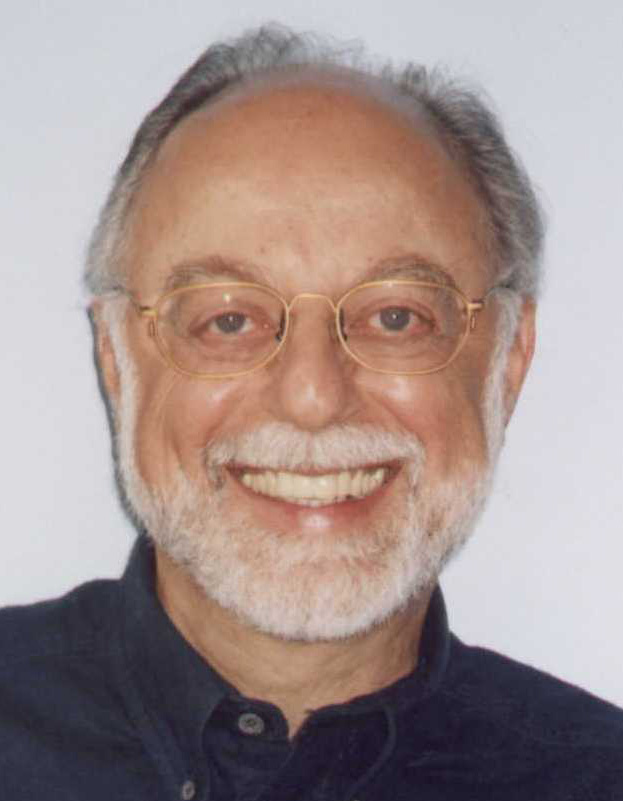 roughout the world, and conducts research on the relationship of quantum physics to consciousness. He is the National Book Award Winning author of Taking the Quantum Leap and many other books including The Spiritual Universe. Dr. Wolf has taught at the University of London, the University of Paris, the Hahn-Meitner Institute for Nuclear Physics in Berlin, The Hebrew University of Jerusalem, and San Diego State University in the United States.
 1)
1) by Jonathan Quintin
 The connected universe view is summarized by Nassim Haramein:
 Scientists have recently discovered that black holes are believed to be threaded by helical magnetic fields. This theory is supported by evidence that the main driver of a black hole’s winds and jets are really the Lorentz force generated by these magnetic fields and their electric currents.
 by
by  Time is a very confusing concept but it can easily be explained. Time is a agreement by everyone that a revolution of the Earth on its axis equals one day and that the revolution of the earth around the sun equals one year. If you were suddenly moved off planet to a point above the earth then there would be no reference as the sun is shining continuously so there would obviously be no daytime or nighttime. You could still use earth time as a reference but Einstein’s Theory of Relativity would also tell you that even when you returned to earth you would have aged more slowly. But even that too is an illusion and here is why.
 by Robert Lanza & Bob Berman
 Relativity, a theory formulated by Albert Einstein, means that all motion is defined relative to a frame of reference, and that space and time are relative, rather than absolute concepts.
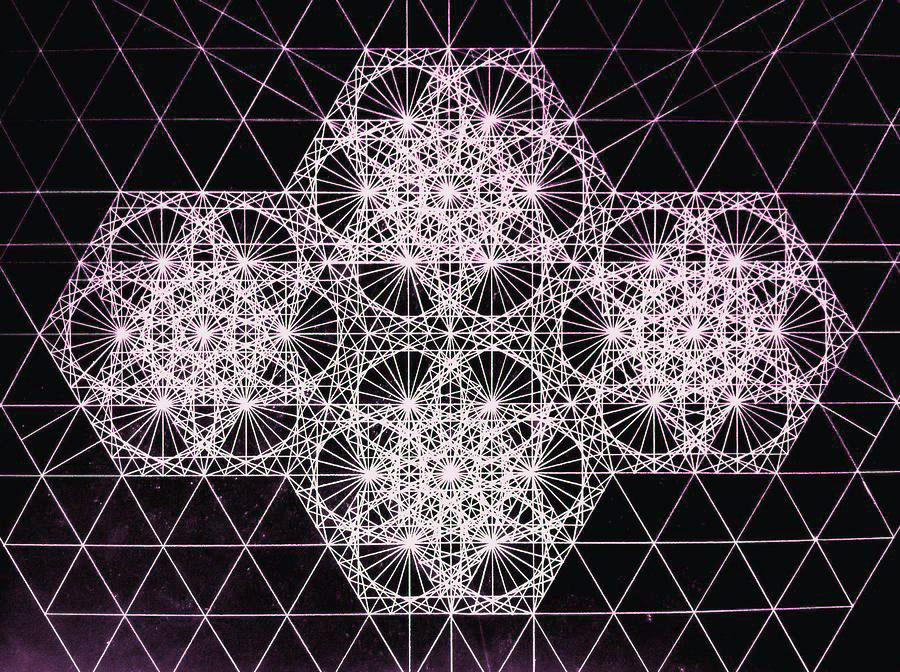 by Jason Padgett and Maureen Seaberg
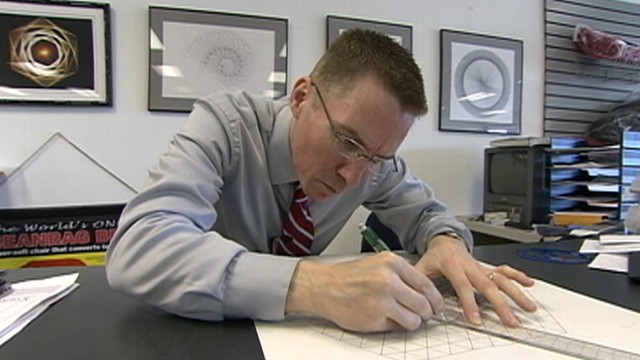 Amazingly, Jason wasn’t born this way. Twelve years ago, he was a party-loving jock and a college dropout who’d never made it past pre-algebra. But a violent mugging permanently and profoundly altered the way his brain works, giving him unique gifts. His ability to understand math and physics skyrocketed. He’s now a devoted student and award-winning artist, hand-drawing the stunning geometric patterns he sees everywhere.
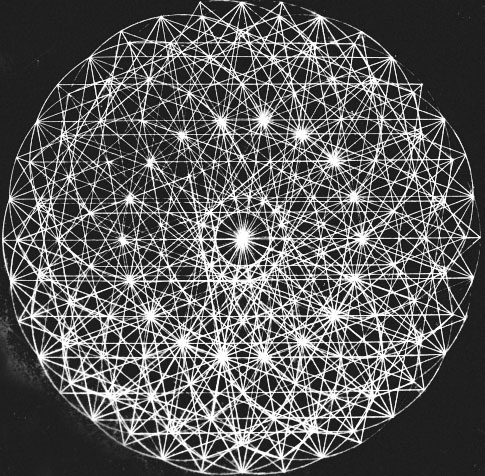 The first documented case of acquired savant syndrome with mathematical synesthesia, Jason is a medical marvel. Some researchers see his transformation as proof that every brain possesses stunning abilities only some people are able to consciously access.
  by Howard Murphet
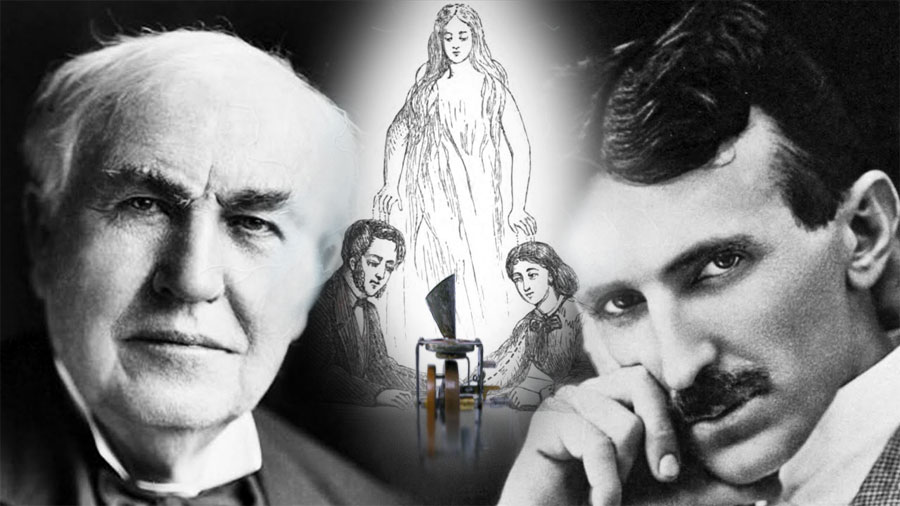 Thomas Edison closely followed the alternative physics work of Albert Einstein and Max Planck, convincing him that there was an entire reality unseen by the human eye. This led to the last and least-known of all Edison’s inventions, the spirit phone. His former associate, now bitter rival, Nikola Tesla, was also developing at the same time a similar mysterious device.
 by Tom Findlay
 By
By 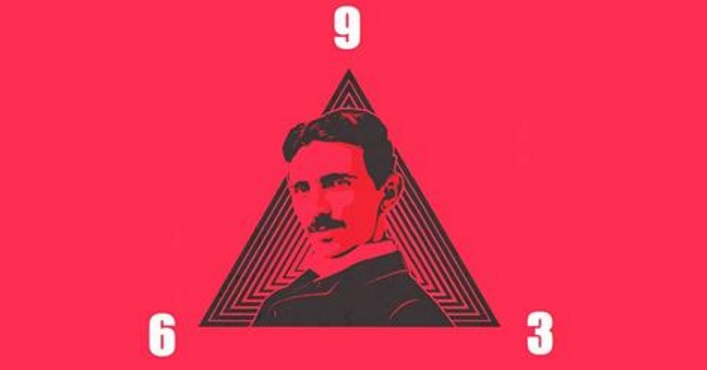 However, the truth is a lot deeper.
  by
by 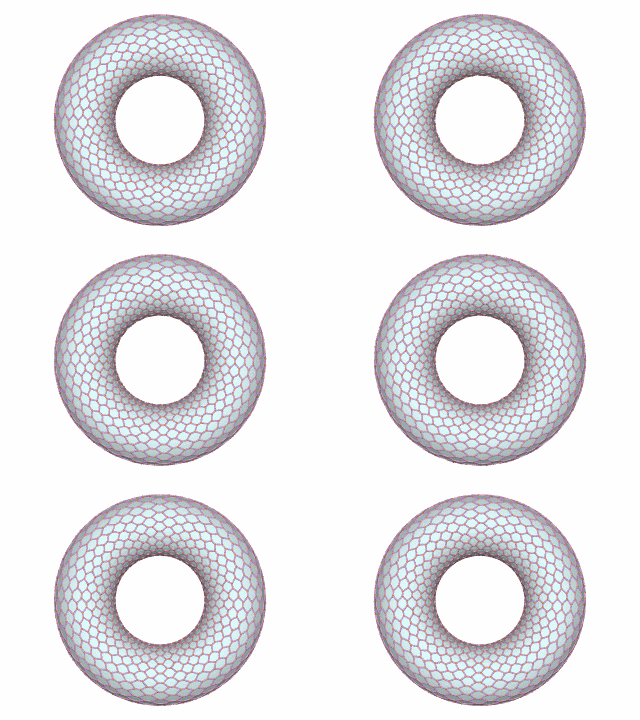
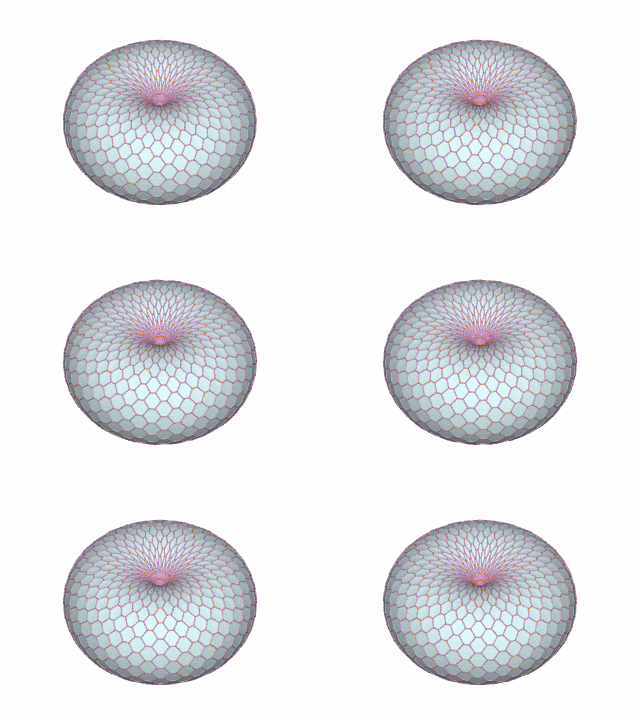 A torus consists of a central axis with a vortex at both ends and a surrounding coherent field. Energy flows in one vortex, through the central axis, out the other vortex, and then wraps around itself to return to the first incoming vortex. The simplest description of its overall form is that of a donut, though it takes many different shapes, depending upon the medium in which it exists. For example, a smoke ring in air or a bubble ring in water are both very donut shaped. And yet an apple or an orange, which are both torus forms, are more overtly spherical. Plants and trees all display the same energy flow process, yet exhibit a wide variety of shapes and sizes. Hurricanes, tornadoes, magnetic fields around planets and stars, and whole galaxies themselves are all toroidal energy systems. Extending this observation of the consistent presence of this flow form into the quantum realm, we can postulate that atomic structures and systems are also made of the same dynamic form.
 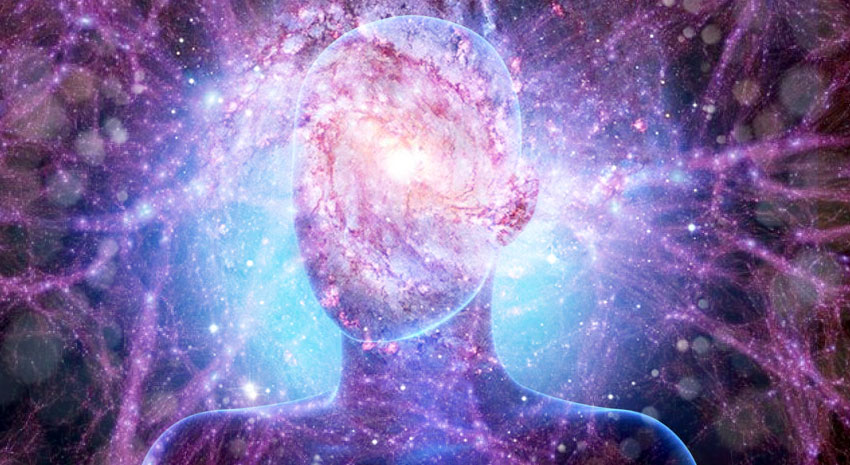 Your Life’s Memories Could, In Principle, Be Stored in the Universe’s Structure