
Diverse Global Traditions Sharing A Common Thread
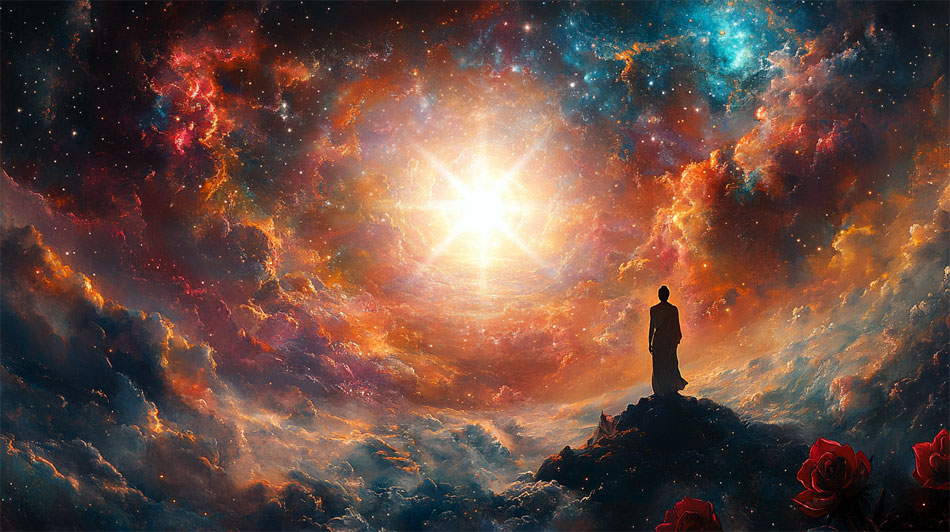
 Across history, human focus has often been divided by ideological differences that lead to conflict and war. However, a deeper look at global traditions reveals a recurring, common theme: the belief that every human being is born with an internal divinity. This “soul seed” is seen as a dormant potential that can be awakened through discipline and mindfulness, allowing a person to transform into a higher life form.
In Western esoteric traditions, this process of inner transformation is known as the “Great Work” or the magnum opus. For instance, Rosicrucianism uses the symbol of the rose cross to represent a divine soul unfolding within the limitations of the physical body. Similarly, the true meaning of alchemy is not about turning metal into currency, but about transforming the “lead” of the human ego into the “gold” of the divine spirit.
These ideas are further echoed in Freemasonry and Hermetic traditions. In Freemasonry, the journey of self-refinement is symbolized by shaping a rough stone into a perfect one. Hermeticism suggests that our physical world is actually a mental construct created by a divine mind, shaped further by human consciousness.
Eastern philosophies, which are significantly older, use the lotus flower instead of the rose to symbolize this spiritual blossoming. In Yoga, the human body and its central nervous system are viewed as a vessel or mechanism that can be consciously operated to activate higher faculties and achieve liberation. Hindu Vedanta further teaches that our sense of having a separate identity is merely an illusion; once we wake up from this “dream,” we realize we are all part of the same divine source.
This theme of internal potential is also found in Buddhism and Jewish mysticism. Mahayana Buddhism teaches that all beings possess the “seed of enlightenment,” exemplified by the Bodhisattva, an individual who reaches enlightenment but stays behind to help others do the same. Meanwhile, Jewish mysticism describes a “Tree of Life” existing within the human form, which a person can ascend to transform from a lower soul into a divine spirit.
Early Christianity and Gnosticism shared these views of internal liberation. Gnostics believed the material world was an illusion imprisoning a “divine spark” that could be freed through direct knowledge. In Eastern Orthodoxy, this is known as theosis, or the process of becoming like God. Early Christians viewed sin not as a permanent stain, but as a “sickness of the soul” that could be healed by cultivating one’s inner divinity, following the example of Christ.
A major turning point dramatically occurred around 400 AD when St. Augustine introduced the doctrine of “original sin.” This new teaching claimed that humans were naturally broken and incapable of healing themselves, meaning they must rely on the external authority of a church system to be saved. This shifted the focus from personal spiritual growth to institutional obedience.
The Great Schism of 1054 AD further solidified this divide. While the Eastern Orthodox Church maintained the goal of merging with the divine, the Western Church became increasingly authoritative. It began to focus more on the suffering of Christ rather than his teachings on transmutation and inner growth. Those in the West who tried to return to the original teachings of internal divinity were often tried for heresy, which is a historical inversion since the original teachings did not include a requirement for a human hierarchy.
By the time of the Protestant Reformation in 1517, the idea of human nature reached a low point with the doctrine of “total depravity,” suggesting that salvation comes only through faith and not through personal action. The sources suggest that these shifts in doctrine were designed to make humanity more submissive by convincing people they are merely “depraved animals” who must submit to man-made authority. Despite these historical changes, the divine spark remains within every individual, leaving it up to each person to choose whether to ignore it or awaken it.
To understand this shift, imagine a gardener who was once taught that every seed has the power to grow into a magnificent tree if nurtured correctly. Later, a new authority tells the gardener that the seeds are inherently rotten and can only grow if the gardener pays for a special, external “blessing.” The power of the tree was always in the seed; the new rules simply changed who the gardener felt they had to answer to.
 Conclusion
Ultimately, the common thread across global traditions is that the divine spark is an inherent part of the human experience, regardless of the cultural symbols used to describe it. While historical shifts in religious doctrine, such as the introduction of original sin and total depravity, sought to move authority away from the individual and toward external systems, the core message of these ancient teachings remains unchanged. These institutional changes were effectively a way of “dumbing down” the population by convincing people they are inherently fallen and must submit to man-made hierarchies. However, the path to liberation – whether through the “Great Work,” theosis, or the awakening of the lotus – rests on the understanding that human experiences are external mechanisms for higher or inner activation. In the end, the choice to ignore or awaken this internal potential lies with the individual alone, as the divine spark continues to exist within everyone, waiting for the attentive effort required to achieve transformation.

Related posts:


Posted in Other Topics, Spiritualitywith no comments yet.
Leave a Reply