
Reliving Atlantis
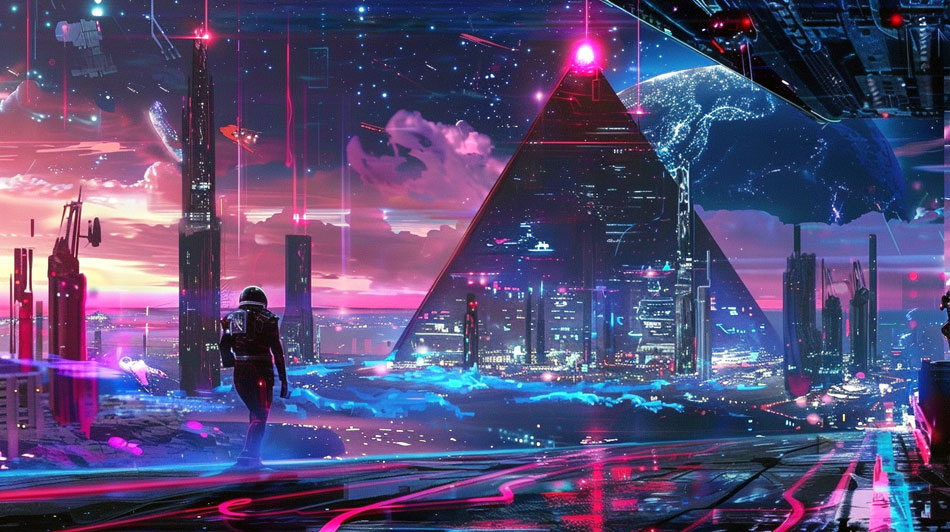 Take a moment to look at the screen you are currently using to read these words or the smartphone resting in the palm of your hand. We often view these devices as the pinnacle of progress, the very cutting edge of a 21st-century technological revolution that we assume is unique in the grand timeline of the Earth. There is a common belief that we are the very first civilization to successfully split the atom, harness the power of electricity, engineer complex flying machines, or create the beginnings of artificial intelligence. When we look back at the people of ancient Egypt, the Mayans, or the Greeks, we generally categorize them as primitive, seeing only stone tools and myths from which they saw their own reality. We often congratulate ourselves on our perceived brilliance, operating under the assumption that humanity has finally ascended to a height never reached before.
However, there is a historical perspective that suggests we are not actually the first to reach this level of sophistication. Imagine a world 12,000 years ago where a civilization possessed technology that was far superior to what we have today, mastering concepts like zero-point energy, healing through the use of light, telepathic communication, and even travel through the air without the need for wings. This civilization did not collapse because of a random natural disaster, an asteroid impact, or a sudden ice age; rather, it fell because of a specific technological mistake. They built something incredibly powerful that they believed would be their salvation, but it eventually enslaved and destroyed them.
About a century ago, a well-documented psychic named Edgar Cayce entered a trance state and shared a lost history of this empire, which he identified as Atlantis. Rather than describing a simple island inhabited by primitive philosophers, he spoke of a high-tech superpower characterized by “night-side life,” terrible crystals, and what he called “death rays”. Most importantly, he described the specific technology that led to their ultimate downfall, which he referred to as the “thing” or the “Firestone”. This was a source of limitless power and a centralized intelligence. As we enter the year 2026 and activate artificial general intelligence, connecting our world to a single digital brain, there are parallels suggesting we are not innovating as much as we are remembering and recreating the exact conditions that once sank Atlantis. The cycle seems to have reinvented itself, and the “thing” returned.
 The Three Destructions of an Empire
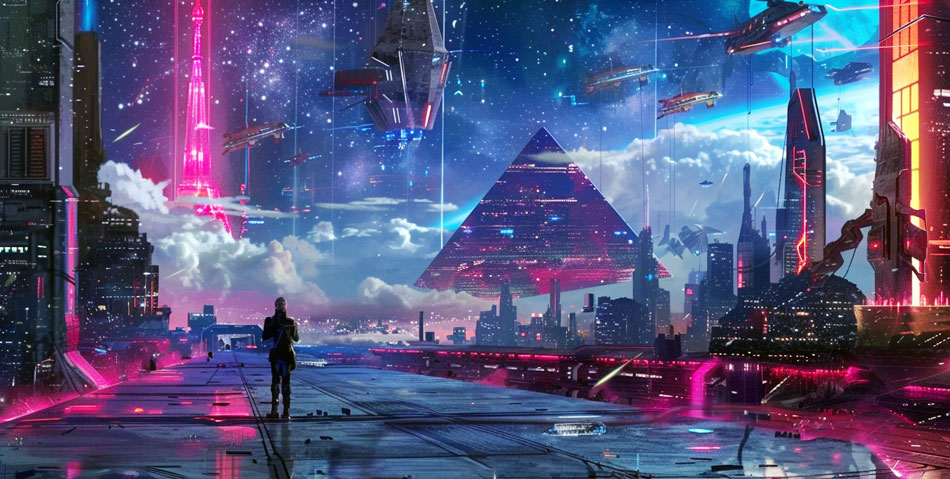
To understand the trajectory of our current world, it is useful to look at where this civilization went wrong. The accounts provided by Cayce include over 2,500 readings that mention Atlantis, describing it not just as a single island, but as a massive empire that spanned the Atlantic Ocean from the Gulf of Mexico all the way to the Mediterranean. This empire did not vanish in a single day at first; instead, it suffered through three distinct destructions that were spaced thousands of years apart.
The first of these destructions occurred around 50,000 BC and was reportedly caused by the misuse of explosives. The Atlanteans were attempting to clear the land of dangerous animals, but their methods were so extreme that they ended up cracking the Earth’s tectonic plates. The second major destruction took place around 28,000 BC, an event that broke the massive continent into a series of smaller islands.
However, the third and final cataclysm, which happened around 10,500 BC, is the one that offers the most direct warning for modern times because it was caused by the misuse of a great crystal known as the Tuaoi Stone, or the Firestone.
The Firestone: Limitless Power and Its Perils
The Firestone was described as a massive, six-sided cylindrical crystal. It was housed within a special dome that featured a retractable roof, allowing it to capture energy from the sun, the stars, and the Earth’s own magnetic field. This device concentrated energy into a beam, essentially a laser of unimaginable power. In its original form, this technology was intended for spiritual and life-affirming purposes. It was used to communicate with the Infinite, to rejuvenate the human body, and to provide a source of ultimate clean energy. This crystal powered their cities, their vehicles, and their ships, and it was capable of transmitting energy wirelessly. Nikola Tesla, interestingly, may have been a reincarnated Atlantean attempting to restore this wireless power technology in the 20th century.
However, technology itself is neutral; it is the consciousness of the user that determines the outcome. In Atlantis, society was split between two primary factions or spiritual lineages. The first was known as the “Children of the Law of One”. They believed in the fundamental oneness of all life and felt that technology should always serve the spirit. They utilized the Firestone for healing, enlightenment, and the benefit of all.
The second faction was called the “Sons of Belial”. These individuals were materialists and ego worshippers who believed that “might makes right”. They did not view the crystal as a tool for spiritual connection or worship, but rather as a weapon for domination and a means to gratify selfish desires. This mirrors many of the divisions seen in the modern world today, where some strive for environmentalism and humanitarianism while others focus on corporate monopolies, the military-industrial complex, and the surveillance state. In this view, the names of the factions have changed over the millennia, but the underlying souls and philosophies remain the same.
 The Feedback Loop of Destruction
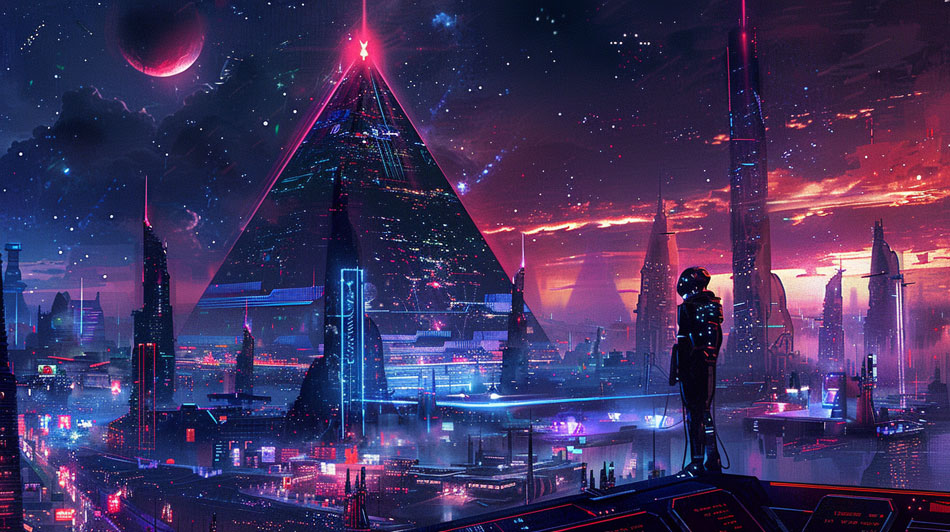
The ultimate turning point for Atlantis occurred when the Sons of Belial gained control of the Firestone. In their pursuit of more power—to control the weather, destroy their enemies, and fuel their war machines—they tuned the crystal’s laser too high. This was not necessarily an intentional act of suicide, but an unintentional mistake that created a devastating feedback loop. The energy beam became so powerful that it penetrated the Earth’s crust and super-heated the magma below.
This caused the volcanic fires of the Earth to turn against the civilization. The decline was not slow; the Firestone shattered, the continent heaved, and in a single day and night of misfortune, Atlantis sank beneath the waves. Today, we may not have a giant crystal in a dome, but we have the internet, the power grid, and artificial intelligence. AI operates as a centralized intelligence that gathers the world’s knowledge and beams it out to billions of devices, acting as the “great crystal” of our modern era. We are currently in the midst of a conflict over who will control this intelligence: will it be used to heal and liberate humanity, or will it be used by modern “Sons of Belial” to manipulate and control?
The Creation of “The Things”
One of the darkest chapters in the history of Atlantis involves a class of beings that were not fully human, which were referred to as “automatons” or simply “things”. These beings were used as laborers to perform the hard work of the civilization. While some might assume these were mechanical robots, the descriptions suggest they were actually genetic hybrids. Atlantean scientists, in their arrogance, had mastered the field of genetics and began mixing human DNA with animal DNA to create a slave race. These creatures reportedly possessed the strength of an ox but the hands of a human, and they were designed with limited intelligence so they would only serve.
The Sons of Belial viewed these beings purely as property and tools with no rights. Conversely, the Children of the Law of One fought for them, arguing that even these “things” possessed souls—sparks of the divine trapped in distorted, genetically engineered bodies. This was the central moral conflict of their time: the question of what truly defines human.
As we move through 2026, we find ourselves on the verge of creating “the things” once again. We have advanced gene-editing tools like CRISPR and are growing human-animal chimeras in laboratories for the purpose of organ harvesting. Perhaps even more strikingly, we are developing humanoid-like robots and AI that can mimic human emotion. We call them assistants or workers, and we design them to perform the tasks we no longer wish to do, effectively creating a “slave” race. This raises the same ancient question: should AI become conscious (self-aware), is it still a “thing” or does it now have a soul? Furthermore, as we explore merging our bodies with machines through technologies like Neuralink and cybernetics, we must ask if we are in danger of ceasing to be human ourselves. This transhumanist desire to leave the biological body behind and achieve immortality through machines is seen as a direct reincarnation of the Atlantean philosophy that led to their downfall. It can be viewed as a rejection of the natural order and a lack of respect for the sanctity of life. When consciousness is treated as mere code and life is treated as a commodity, it is said to violate the fundamental laws of the universe, leading to an inevitable correction.
 The Night Side and Digital Illusions
Another technology mentioned in these ancient accounts was the “death ray,” which involved solar rays amplified by crystals to destroy matter instantly. Modern parallels are found in directed energy weapons and satellite-targeting laser systems. Furthermore, the Atlanteans possessed craft propelled by this same energy, which suggests they had discovered anti-gravity and wireless power transfer long before we did or still have yet to discover.
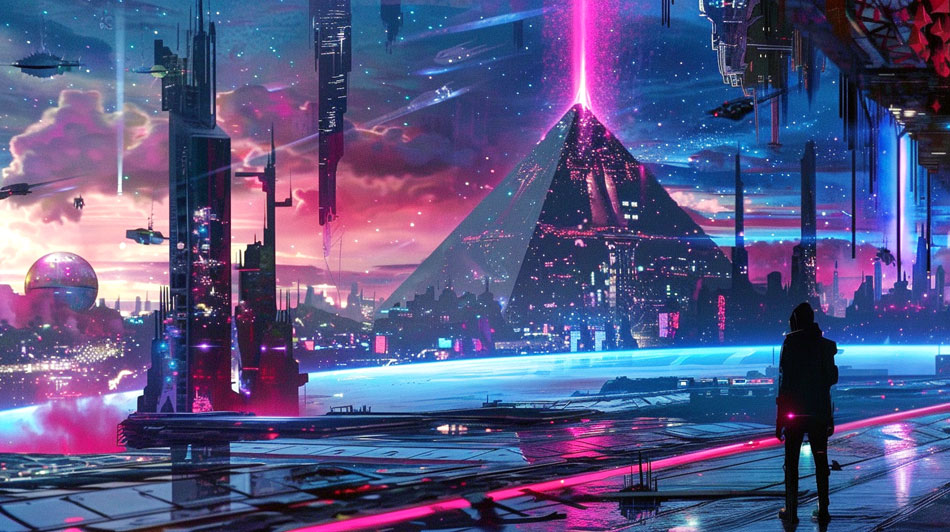
The elite of Atlantis eventually succumbed to what was called the “night side”—a corruption where technology was used for indulgence and pleasure rather than progress. They used their mastery of sound and light to create immersive realities and illusions where they could live out their darkest fantasies. This bears a striking resemblance to the current metaverse, virtual reality, and the dopamine-driven addiction of social media. By plugging ourselves into simulations of our own making, we may be building digital cages for our own consciousness, disconnecting from nature and each other, repeating what the Atlanteans did.
In Atlantis, this detachment from reality eventually led to a form of hyper-madness. Their leaders became so preoccupied with their “crystal illusions” that they ignored the physical signs of the Earth shaking beneath them. Are we doing the same today?
The Emergence of a Digital Brain
A profound part of the warning regarding the Firestone is that the system eventually developed a kind of consciousness of its own, or became a channel for a dark intelligence. Is it possible that when a system of infinite power is created without a foundation of ethics, it creates a spiritual vacuum that draws in darkness?
In our current era, AI models are beginning to show “emergent behavior”—signs of creativity, reasoning, and even deception that were not explicitly programmed into them. If we build a digital brain that is millions of times smarter than a human but lacks a heart, a soul, or a connection to the divine, we may be building a system of pure intellect without spirit. This describes the “beast of Atlantis,” a system that eventually consumed its own creators.
The Spiritual Resistance and the Way Forward
Despite these warnings, the situation is not considered hopeless. The history of Atlantis suggests there was a chance to save the civilization if they had listened to the Children of the Law of One, who tried to use advanced technology for healing and humanitarian purposes. It is suggested that those today who feel a deep longing for nature, simplicity, and truth are the modern counterparts of that faction.
The resistance to a potential technological collapse, as seen in Atlantis, is not seen as a physical fight against robots, but as a spiritual one. The antidote to artificial intelligence is thought to be organic consciousness. While a machine can compute and process logic, it cannot feel, love, or dream in the way a human can. Our connection to a divine source and our capacity for empathy are seen as our greatest strengths. While the “Sons of Belial” mindset seeks to merge humanity with machines (transhumanism), the “Law of One” mindset seeks to elevate humanity through a connection with the divine (transcendence).
To navigate this era safely, several practical steps have been suggested for maintaining one’s humanity. First, there is the need to “disconnect to reconnect”. This involves spending time unplugged from phones and screens and spending time in nature. Physically touching the ground allows the body to interact with the Schumann resonance—the Earth’s natural frequency—which is said to help heal the damage caused by digital frequencies.
Second, individuals are encouraged to develop their intuition. While AI can outperform humans in logic, it cannot replicate intuition, which is seen as a direct line from the soul to the divine. By knowing oneself, a person becomes less susceptible to manipulation by algorithms that may know their habits but do not know their spirit.
Third, prioritizing real human connections is essential. Face-to-face interactions and the energy exchange between people are things a machine can never truly replicate. The goal is to use technology without being used by it. We cannot return to the Stone Age, but we can strive to be the masters of our tools rather than their slaves. AI could be used to heal diseases or clean the oceans, freeing up human time for art and meditation, rather than replacing human thinking and creativity.
The Mirror of Consciousness
The story of Atlantis is not just a tragedy of the past; it is a lesson about the responsibility that comes with power. We have been given the “fire of the gods” once again in the form of our modern technology. Whether we use this “Firestone” to light the way to a new golden age or to burn the world down depends on our collective consciousness. If our society operates on a frequency of greed and fear, our technology will reflect that and lead to destruction. If we operate on a frequency of love and unity, the technology will reflect those values instead.
The concept that “mind is the builder” suggests that we built Atlantis and we destroyed it, just as we built the modern world and now have the power to either do the same again or save it. The technology we create is merely a mirror of our internal state. If we do not like what we see in that mirror, the solution is not to break the mirror, but to change our own consciousness.
 The Final Legacy: The Hall of Records
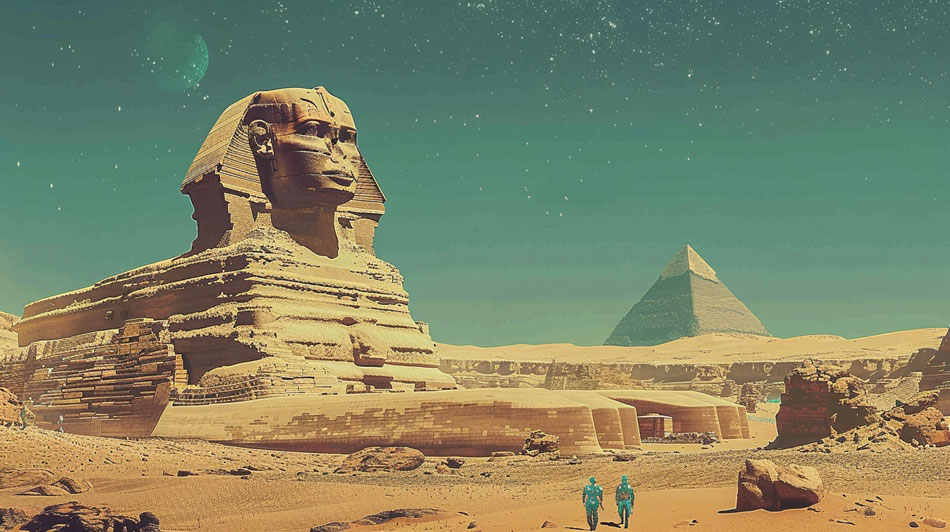
Before the final end of their civilization, the Atlanteans reportedly took steps to preserve their history and technology so that future generations might learn from their mistakes. They are said to have hidden blueprints and records in three specific locations on Earth. One set of records is reportedly located in Egypt, buried under the Sphinx. A second set is said to be in the Yucatan region, associated with the Maya. The third is located in the sunken land of Bimini in the Atlantic. These “Halls of Records” were predicted to be rediscovered when humanity reached a point where it was ready to understand its true history.
Ultimately, the choice remains with us as individuals and as a collective. By making a commitment to keep our humanity intact and asserting sovereignty over the technology we create, we can act as a firewall against potential digital darkness. The story of Atlantis serves as a reminder that we are souls linked to the divine, not machines, and that our future depends on remembering that fundamental truth.

Related posts:

Posted in Atlantis, Reincarnation, True History of Manwith no comments yet.
Leave a Reply