
Anomalies On Mars: Hints Of Ancient Civilizations
 by Jimmy Roberts
Welcome to this extraordinary deep dive into the captivating world of Mars exploration as we unveil astonishing imagery from NASA’s Curiosity Rover, a remarkable robotic explorer that has revolutionized our understanding of the Red Planet. In the following videos, you will discover how the Martian terrain – etched with secrets of a cataclysmic past – continues to intrigue and educate scientists and enthusiasts alike.
Why Explore Mars?
Mars holds critical insights into the history of our solar system. By examining the geological formations and atmospheric conditions documented by Curiosity and other rovers, we can better understand not just the Red Planet, but the very forces that shaped Earth. This exploration isn’t just about awe-inspiring images; it’s about understanding a neighboring planet’s potential for past life, and the implications it has for humanity’s future in space.
Why This Matters
Understanding Mars has never been more crucial. The astonishing images captured by the Curiosity Rover illuminate the historical and environmental conditions that have shaped this neighboring planet, offering valuable clues to its potentially habitable past. This knowledge is invaluable as we strive to better comprehend our own planet and the vast universe that surrounds us. Mars exploration not only serves academic interests but also fuels dreams of future human colonization.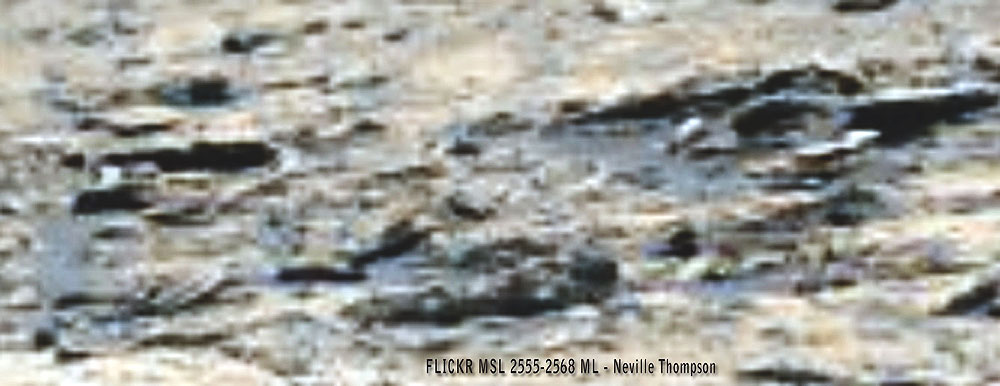
I have made a lot of use with photographs that came from rovers that landed on Mars. The importance of these photographs is the ability to look at different details up close. As a geological distance it’s equivalent, more or less, to a field research. It was a big surprise. One can clearly see buildings, broken facilities, in some instances – weapons and even humans. The place appears like after disaster, everything is destroyed like post war testimonies. It sounds like science fiction, but we have to get use to it.” Quote from Universe Beyond The Horizon by Hagar Yanai and Prof Haim Eshed
“Nur El explained all this by first saying that Mars was, up until about 100,000 years ago, a planet very similar to the earth. There was air, water, and an abundance of plant and animal life. The cities flourished on the surface just as ours do. At that time, through their interdimensional science and also with their superior telescopes, they saw, somewhere out in space, a cataclysm take place. One of the giant suns suddenly went berserk, flared up like a nova, and then exploded in a terrific, blinding flash. Huge chunks hurtled out into space in different directions, each one a smaller, white-hot, atomically-burning sun, shooting off great streamers of atomic energies. It was determined by calculations that one of these fiery pieces would pass very close to our solar system. As it was larger than our own sun, it was conceivable that there would be tremendous repercussions, in fact, anything was possible.
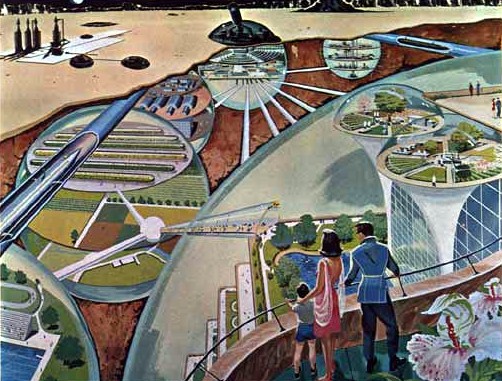
“Because of the great size, it would have a tremendous gravitational pull, besides giving off great energies. It was also determined, as light traveled much faster in space than this huge chunk, that it would pass our solar system. This, therefore, gave the Martians a grace period for preparation. They had, however, a choice: to stay on Mars or migrate to another planet far away from this solar system. After a search of the nearby practical limits of the heavens, it was found that there was no other planet available which would be suitable. So an alternative was decided upon. They could build huge cities underground! During the next two hundred years or so, an almost frantic building program was assiduously pursued. We can well imagine some of the problems, the sacrifices, and the labor and research that went into this tremendous project, but it was finally accomplished. In due time all was snug and ship-shape as possible. Buried deep under many feet of rock and earth, in their newly constructed dome-like cities, the people of Mars waited for the final hours. Day by day they watched the white glowing mass of light grow larger and larger. There was no really accurate way by which to measure how close it would pass or just how hot it would be. No doubt many thought it would be the end!
“Finally the hour struck. Nur El stated that for eight days the planet was rocked, torn and twisted, as great forces blasted and ripped the surface. Plant and animal life disappeared almost entirely, except for the few species that escaped by being buried or by being in caves. The air and water, too, were largely dissipated or drawn off with the passing nova. When it was over, Mars was decimated and burned to a cinder.
“Other planets also suffered. On Earth there were great earthquakes and tidal waves. A great continent and civilization, called Lemuria, sank beneath the sea. Great deserts were burned into the surface in places that were formerly beautiful forests and plains. The Sahara and Gobi deserts were two of these. Earth’s orbit and axis, or the poles, were also changed. Instead of a circular orbit Earth was rocked into a elliptical orbit, with the addition of a very slight but definite wobble or oscillation, which it has never lost. Uranus was pushed out into an orbit much further away from the sun. Neptune suffered a similar fate although not quite so pronounced.
“It is conceivable that the other planets were also affected according to their size and position at the time of the passing of this huge celestial ‘atom bomb.’ No doubt the knowledge of this cataclysm will clear up some of the mysteries of Earth’s history, which have been puzzling the seekers of truth for many years.” From the book The Truth About Mars
Full pdf copy download of The Truth About Mars available here.

Related posts:

Posted in Life On Other Worlds, Other Topics, The Truth About Marswith no comments yet.
Leave a Reply