
Alien Contact Investigations
 Alien Contact They Tried To Bury – Interview with Paola Harris
But this is not the whole story. For veteran researcher Paola Harris, uncovering the deeper truth required a profound personal shift. “I started with Alan Hynek putting pins and maps,” she explains. “I didn’t care what was inside the craft… I had to graduate.” That graduation led her to an earlier, stranger, and perhaps more optimistic chapter of human-ET contact that has been largely forgotten. As Harris puts it, “Consciousness and contact is graduate school.”
This history isn’t one of terror, but of communication, warnings, and startlingly human-like beings. Thanks to Harris’s work and her access to the rare photo archive of the late, great UFO researcher Wendell Stevens, a different and more complex picture of the phenomenon is re-emerging from the shadows.
 The Great Narrative Shift: How UFO Encounters Were Rebranded as Frightening
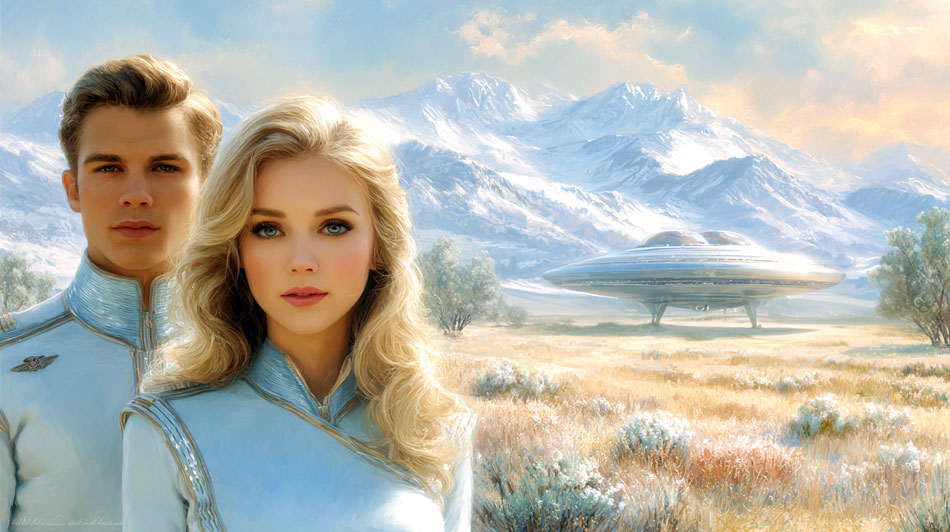
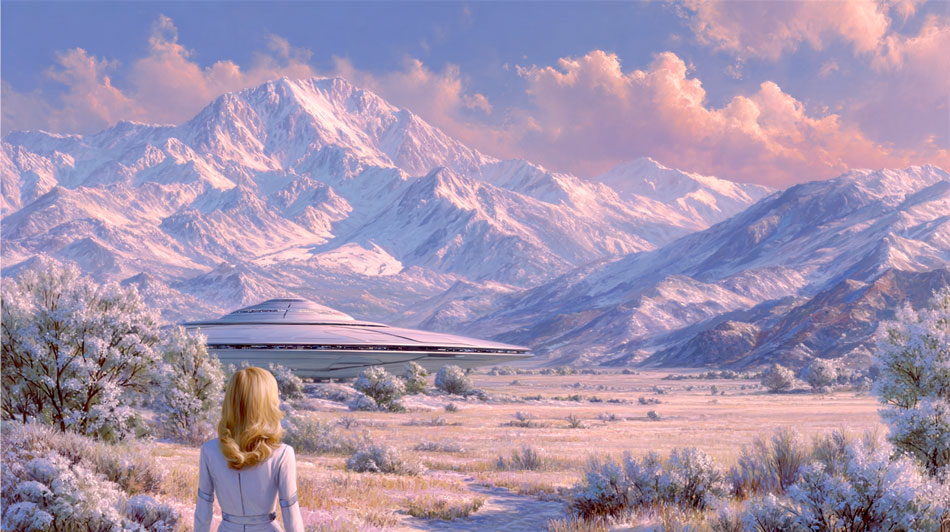
According to Paola Harris, the story of human-ET contact was deliberately steered away from its positive origins. The 1950s and 60s were characterized by the “space brother” movement, where encounters involved attractive, human-like entities who brought messages of peace and concern.
This narrative took a sharp, dark turn, beginning in earnest with the famous Betty and Barney Hill abduction case. The focus shifted dramatically to frightening experiences, DNA harvesting, and menacing grey, mantis, and reptilian entities. Harris argues this rebranding was no accident. The old narrative allowed for empathy; the new one ensures fear. The key, as told to her by Colonel Philip Corso, was the distinction between a natural being and a manufactured one. With a manufactured clone or “extraterrestrial biological entity,” a human connection is impossible. “You can’t bond with a clone which is an extraterrestrial biological entity as Colonel Corso told me, you can’t bond but with these people, with these space people, you can invite them to Starbucks.”
This engineered shift toward fear was, as Harris notes, “very convenient” for the “managers of the UFO phenomenon” – her term for the unknown entities or agencies controlling public perception. By preventing empathy, they maintain control. “If we start… empathizing and feeling like God created people on other planets,” she explains, “it runs, it really runs contrary to whoever is managing.” Yet, this modern fear narrative has a glaring inconsistency. Harris recalls a conversation with the late Harvard psychiatrist John Mack, who told her that the “DNA harvesting and that program had ended in 1994.” It begs the question: “Why in the world are we still on that?”
 The Message Then and Now: From Nuclear War to Ecological Crisis
As the appearance of the visitors changed in the public narrative, so did their messages. In the 1950s, the warnings were starkly geopolitical. The famous contactee George Adamski, for example, was given a mandate to meet with world leaders, including JFK and Pope John the 23rd. His message was a choice for humanity: embrace a peaceful “space economy” or continue down the path of a destructive “war economy” that requires the constant creation of conflict.
Decades later, Harris has observed a new but equally urgent message, particularly in her research in Latin America. The focus is now “heavily ecological.” She cites a 2014 contact event in Chile where the contactee Ricardo Gonzalez was explicitly warned by beings from a world called Mapu that humanity would soon face a serious “problem with water.”
While the specific threats have evolved from nuclear annihilation to environmental collapse, the underlying theme has remained consistent: a profound and persistent concern for the well-being of humanity and the future of our planet.
 The Dismissed Case with Startling Evidence: The Story of George Adamski
George Adamski is a prime example of a historical contactee who has been widely ridiculed, yet whose case contains an astonishing amount of physical and circumstantial evidence. Often written off as a fraud, the artifacts associated with his 1952 Desert Center encounter challenge easy dismissal.
Harris points to several key pieces of evidence that are rarely discussed:
Plaster Casts: In the presence of six witnesses, plaster casts were made of the footwear of the Venusian being named Orthon. The soles showed hieroglyphic-like markings, with different patterns on each shoe.
The Photographic Plate: A glass photographic plate, common for the era, was requested by the visitors. It was returned to Adamski on December 13, 1952, now etched with the same type of strange writing found on the shoe imprints.
Papal Recognition: Adamski was received by Pope John the 23rd, who presented him with a medal of honor.
Final Resting Place: Despite the controversy surrounding his life, George Adamski is buried in Arlington National Cemetery.
Adding to the mystery is a strange biological detail: Adamski reportedly did not have a belly button. In its place was a star symbol with six-inch rays coming out of it. This collection of artifacts and high-level acknowledgments makes the blanket dismissal of his story difficult to justify, and it highlights the challenge of evaluating different forms of proof. As Harris notes, “What contactee has had physical evidence like he had you know.”
 Not Just Visitors: The Beings Who Lived Among Us
Perhaps the most shocking claim from this forgotten era is that some of these human-like beings were not just temporary visitors. They were living and working on Earth, fully integrated into society.
Harris tells the story of Maurizio Cavallo, an Italian contactee who met beings from a planet called Clarion. He was taken to a villa in Tuscany where these beings were living and growing their own vegetables. Incredibly, one of them “works in a bank in Rome.” Cavallo was allowed to take Polaroid pictures of these beings aboard their ship – a technology incredibly difficult to fake at the time. The photos reveal beings with unique features, like a little girl with “bluish skin and her ear is down to here.”
This connects to a broader idea that these beings are acting as “cosmic anthropologists.” They are here to study humanity firsthand, living among us as part of a kind of “internship.” When asked what they were looking to take away from their time here, the answer was specific: they are studying “how we live, how we think and what our emotions are.”
 A Photographic Paradox: When the Evidence is “Too Good”
While George Adamski’s case is supported by “hard” physical evidence like plaster casts and inscribed plates, other historical cases present a different kind of challenge: photographic evidence that is often dismissed for being “too good” or “too clear.” Harris argues that this is a judgment based on opinion, not research. In an era before Photoshop, creating such clear fakes was not a simple task.
Furthermore, some photographic evidence is strange in a way that defies simple explanation. In the Howard Menger case, human-like Venusian visitors would sometimes appear in photographs not as people, but as columns of “pure light” or an aura. Menger attributed this to their ability to bilocate – to be in two places at once, such as in his yard and on their ship simultaneously.
This photographic anomaly highlights the immense challenge of documenting a phenomenon that may operate entirely outside our known laws of physics, producing evidence that is paradoxical and easy to misinterpret.
 Conclusion: Reclaiming a Forgotten History
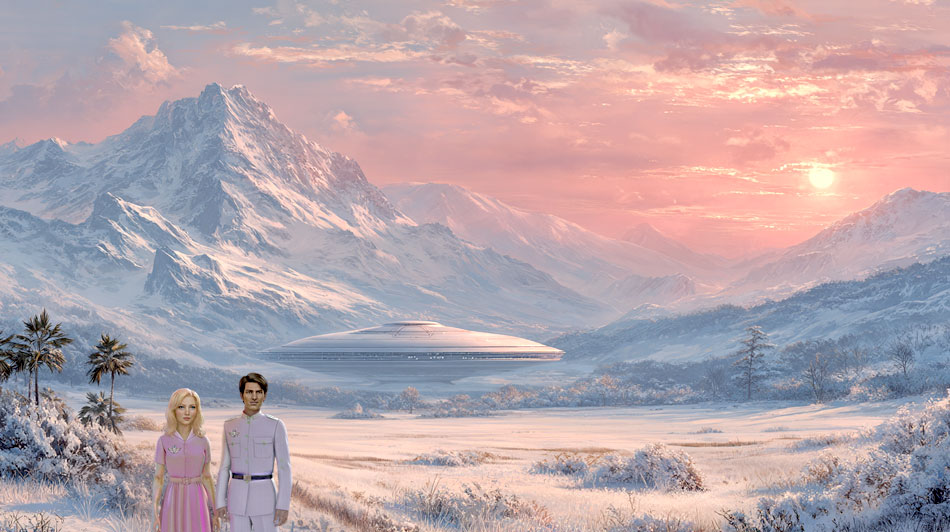
The evidence presented by researchers like Paola Harris suggests that a rich, complex, and often positive history of human-ET contact has been systematically overshadowed by a modern narrative of fear and abduction. The stories of Adamski, Menger, and Cavallo point not to monsters in the dark, but to humanoid beings concerned with our future, studying our culture, and even living among us.
This raises a crucial question we must now consider. If this history of friendly, human-like contact is real, who decided we should forget it, and what does it mean for our place in the universe if we start to remember?

Related posts:

Posted in Life On Other Worlds, Other Topics, UFOswith comments disabled.