
A Journey Into The Underground Cities of Mars
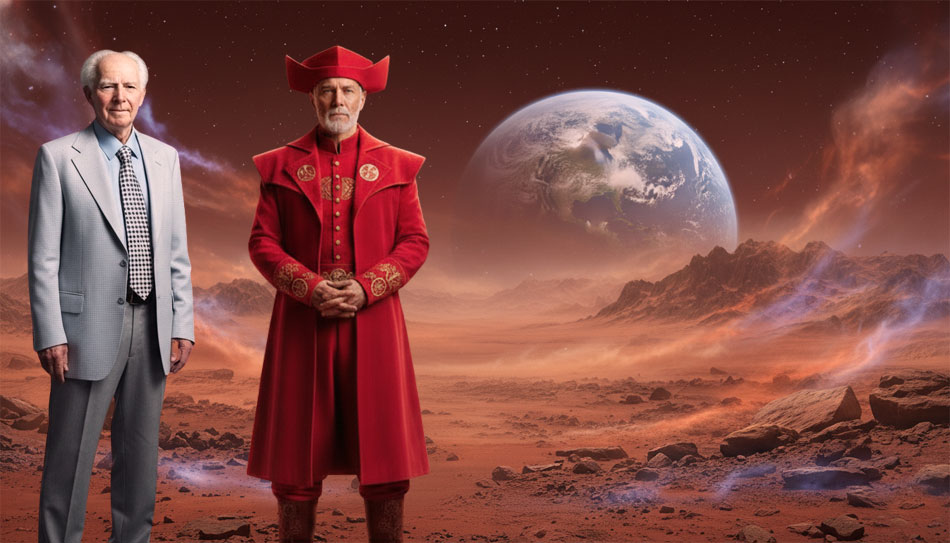 The following is a short concise summary of several astral visits, 33 in number, to the underground city of Mars by the Unariun Moderator Ernest L. Norman and were conducted with the help of Nur El, a Martian guide. These visits took place in the year 1955. The peaceful, advanced civilization of Mars was forced to relocate to subterranean domed cities approximately 100,000 years ago in order to survive a solar catastrophe (a fragment from a supernova).
 The Red Planet Revealed
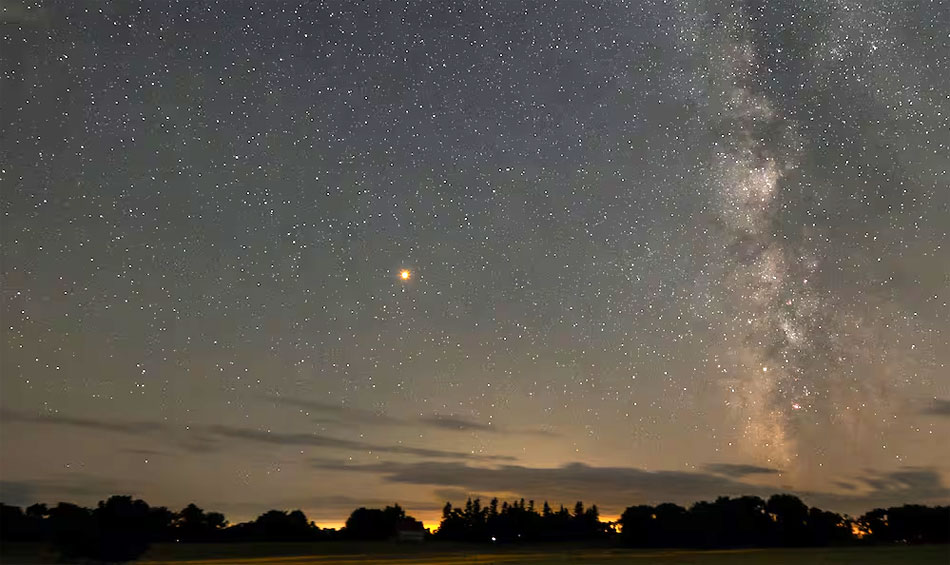
For as long as humans have looked at the night sky, Mars has been a source of endless wonder and mystery, a bright red speck that has served as a canvas for our greatest myths and scientific curiosities. While modern telescopes like the one at Mt. Palomar have made the universe appear larger, they haven’t necessarily brought it closer in a way that helps us understand the pulse of life that might exist on our planetary neighbors. To truly understand the nature of a place like Mars, one might have to look beyond the physical lens and explore the “physics of consciousness,” where the mind acts as a high-frequency transmitter and receiver, capable of bridging the vast distances of space. Through this lens of extrasensory perception, we can explore an eyewitness account of a civilization that is not only advanced but provides a startling mirror to our own evolution.
 The Harsh Surface and the Great Migration
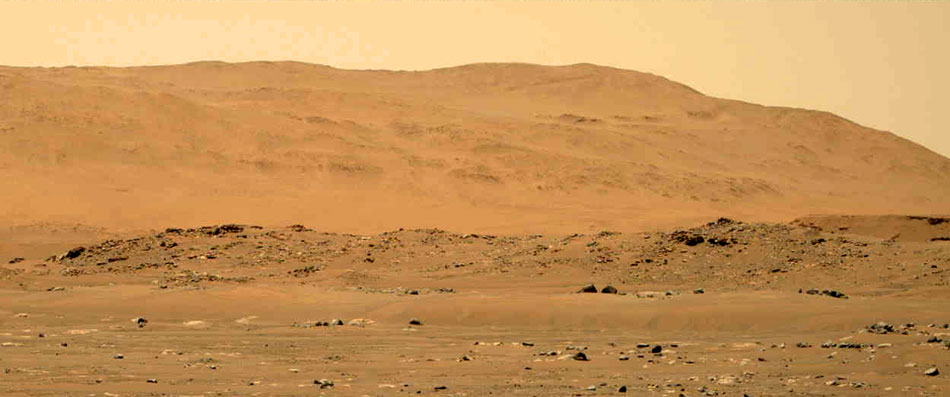
Walking onto the surface of Mars today is a rugged experience. The terrain is a landscape of rocky hills, endless sandy wastes, and strange, whirling dust clouds that are driven by thermal currents. Because the planet has a very thin ionosphere, it remains largely unprotected from beta, gamma, and cosmic rays, which ionize the rare atmosphere and contribute to the planet’s distinct reddish hue. Water is incredibly scarce on this arid world, with most precipitation falling only at the poles, and the vegetation is limited to prickly, cacti-like plants and a unique, spongy green alga that grows with incredible speed near the melting polar ice caps. This alga can reach heights of fifty feet during the brief seasonal thaw before it disintegrates just as quickly.
Despite this desolate exterior, Mars was not always a desert. About 100,000 years ago, it was a sister planet to Earth, complete with lush forests, flowing rivers, and deep oceans. The shift occurred when Martian scientists, who were already masters of astrophysics, observed a giant sun far out in space go supernova. They calculated that a massive, atomically burning fragment of this star would pass dangerously close to our solar system. Knowing that the gravitational pull and intense heat would strip their atmosphere and decimate the surface, the Martians spent two centuries engaged in a frantic building program, retreating deep into the crust of their planet. When the supernova fragment finally passed, the surface was “burned to a cinder,” and even Earth felt the repercussions through massive earthquakes and the sinking of the lost continent of Lemuria.
 The Architecture of the Underground
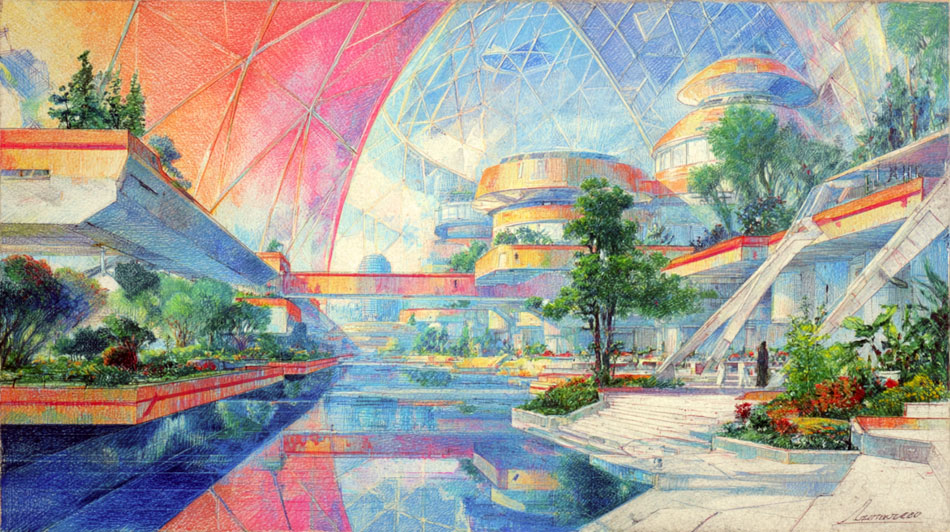
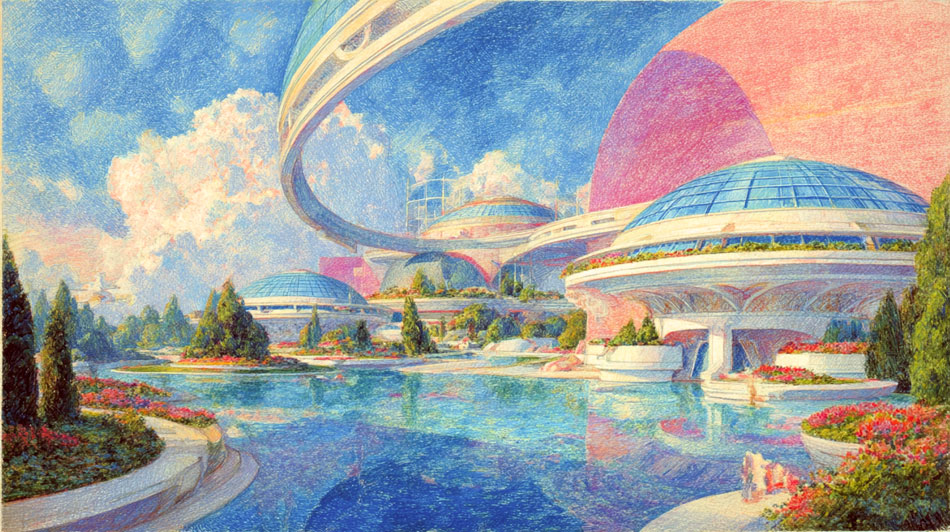
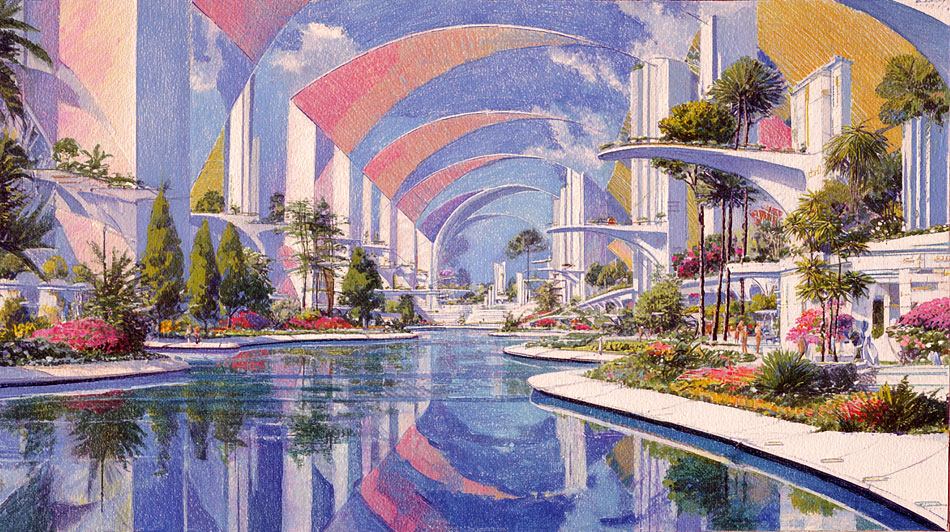
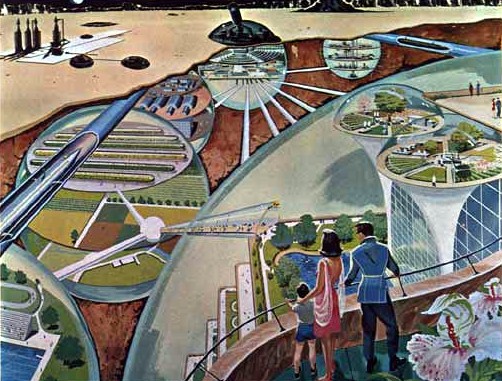
The solution to their survival was the construction of massive underground cities, which are laid out in a wheel-like design. At the center of each city is a massive hub housing municipal departments and a large atomic power plant that supplies the entire population’s needs. Radiating from this hub are streets that rise at a gentle angle, with homes built in tiers like a stadium. The most striking feature for any visitor is the soft, radiant white light that fills these cities. It isn’t produced by bulbs but by thousands of fluorescent tubes located behind a false blue plastic ceiling, creating a simulated sunlight that is healthful for both people and plants.
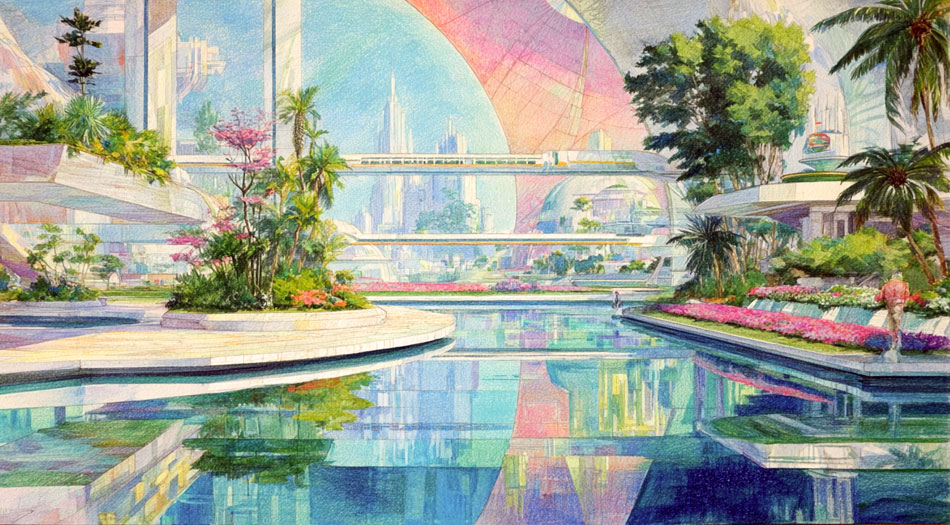
Connecting these domed cities is a network of huge metal tubes, some three to five hundred feet in diameter. These tubes house the Martian transportation system: silent, high-speed monorail cars that glide between cities. Interestingly, these are the very structures that Earth astronomers have spent decades debating, often misidentifying them as “canals” when they are glimpsed through telescopes as shifting sands cover and uncover them.
 Daily Life in a High-Tech Society
A Martian home is a marvel of simplicity and efficiency. The houses are semi-prefabricated from pastel-colored plastics, with walls filled with a hardened foam that provides both incredible strength and insulation. Inside, the air is perfectly conditioned, maintained at a constant 68 degrees, and pressurized to about seven pounds per square inch to assist in supporting the massive overhead domes.
Domestic chores, as we know them, simply don’t exist. Cooking is done in high-frequency ovens that can prepare a full meal in a matter of seconds. Dishwashing is an electronic process where streams of energy, rather than water, leave dishes sparkling and clean. Even personal hygiene has been reimagined; Martians bathe in booths using an atomized, fragrant liquid and energy rays that refresh the body without the need for large quantities of water.
The layout of their cities also reflects a lack of the commercial “clutter” found on Earth. There are no neon signs, no gaudy advertisements, and no storefronts on the main residential levels. Instead, one must descend a tube to reach the shopping centers. These markets are filled with booths displaying clothing and food, and the experience is made effortless by “escalator sidewalks” where a person can simply sit on a bench and be moved slowly past the shops.
 A Society Built on Integrity
Perhaps more advanced than their technology is the Martian social structure. They have moved beyond the “dog-eat-dog” competition of Earth’s systems. On Mars, there is no money and, consequently, no banking system. Instead, a citizen’s medium of exchange is their personal honesty and credit. Each person is provided with a metal identifying plate, similar to a charge card, which they use at automated dispensers to get whatever food or clothing they need. Because there is no fear of insecurity, no one hoards or takes more than they require.
Their government is equally simplified. There are no written laws, as every citizen lives by an unwritten code of “doing for others first”. If someone shows signs of selfishness or anger, they aren’t thrown in jail – which don’t exist – but are instead viewed as being ill. They are quickly given electronic treatments to remove the negative psychic pressures that caused the behavior. Leadership is based strictly on merit and ability, with “Iclas,” or group leaders, responsible for the welfare of every five families.
 Advanced Health and the Science of Life
Martian medical science is centered around the understanding that the body is an electronic device. Doctors use radiant energy to treat disorders, often restoring malfunctioning organs like kidneys in a matter of minutes. They have even mastered the ability to regrow human tissue and plant chlorophyll through intelligent energy streams tapped from higher dimensions.
One of the most fascinating aspects of their society is how they handle the beginning of life. When natural birth is impossible or impractical, Martians use “artificial gestation chambers”. In these glass tanks, a baby is grown in a yellowish, nutrient-rich liquid under controlled radiant energies. A capillary system is grown first, followed by membranous tissue, and finally the fetus, which is nourished by a blood supply that is constantly purified. This process allows for the healthy development of children while maintaining a stable population that matches their death rate, usually limited to two children per family.
Education on Mars begins almost immediately after birth. There are no public schools; instead, children are taught in their sleep using a “Z-ray” that imparts lessons directly into the subconscious mind. By the time a Martian child is ten years old, they typically possess the equivalent of a college education, specialized in the vocation for which they are best suited.
 Philosophy, Reincarnation, and the Earth Connection
The Martian perspective on life and death is far more integrated than our own. They view reincarnation as a factual part of existence and plan their future lives among old friends and relatives. Communication with those who have passed into the “spirit world” is a normal, daily occurrence, and every Martian considers their spirit relatives a part of their active life.
There is also a deep historical link between Mars and Earth. Over a million years ago, Martians migrated to Earth to start a colony. While they eventually found it impractical to maintain, that colony survived and, through the long process of evolution, became the Chinese race. This shared ancestry is said to be the source of many cultural traits, such as the high value placed on “face” or personal integrity, and the deep respect for the aged.
 Bridging the Gap: Predicting the Future
When these eyewitness accounts were first recorded in the mid-1950s, many of the concepts sounded like pure fantasy. However, as Earth’s technology has advanced, we have begun to duplicate many of the Martian “accouterments of life”. Today, high-frequency cooking is a household standard, and biological scientists have begun experimenting with artificial placentas to sustain life outside the womb. Even our architects have begun to propose domed cities for New York and other major hubs as a way to control the environment and eliminate the costs of weather-related maintenance.
The photographs and data returned by missions like Mariner, Viking, Pathfinder, Global Surveyor, and Rovers have slowly begun to validate the descriptions given decades ago. We have seen the evidence of ancient floodplains at Ares Vallis, where rounded pebbles suggest the presence of long-term running water. We have seen the “Face on Mars” and other anomalies in the Cydonia region that hint at an ancient, structured past. We have confirmed that while the surface is currently a “freeze-dried world,” it possesses a complex history of warmer, wetter episodes where life could have flourished.
 The Message for Earth
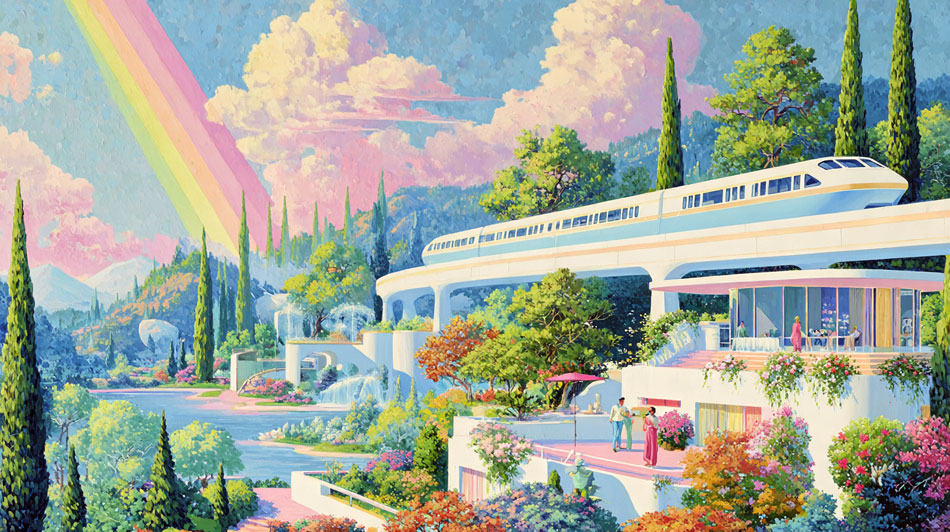
The Martians, through their advanced understanding of the universe, are said to be deeply concerned about the “downhill way of life” currently prevalent on Earth. They view our obsession with destructive atomic energy and our “robot-like existence” of work and sleep as a path toward a race of psychopathic misfits. Their hope is that by sharing their way of life – a society built on peace, creative spirituality, and scientific balance – they can inspire Earthlings to overcome their material limitations.
As the “cosmic curtain” begins to open at the end of our current millennium, we are being invited to view ourselves as part of a much larger neighborhood. The exploration of Mars is not just a search for rocks and microbiotics; it is the first phase of a reawakening to the reality of the expanding universe in our own backyard. Whether through the hardware of rocketry or the propulsion system of the mind, the goal is the same: to move out into the stars and regain a lost heritage of infinite love, wisdom, and peace.
 A New Era of Discovery
The journey to Mars is far from over. Future missions, planned to return samples of Martian soil and rock, will likely provide the final pieces of the puzzle regarding the existence of biological life. But until that day comes, we can look at the data we already have – the evidence of ancient rivers in Nanedi Vallis, the magnetic “fossils” in the planet’s crust, and the deeply layered canyons that resemble our own Rocky Mountains – and realize that we are looking at a world that was once very much like our own.
Life, as some scientists now suspect, may be a “cosmic imperative,” appearing wherever liquid water and chemical energy are found. If life on Mars and Earth shared a common origin or flourished simultaneously, it changes everything we know about our place in the galaxy. We are not the sole proprietors of intelligence, but rather one small part of a vast, interconnected tapestry of life that spans billions of star systems.
In the end, the truth about Mars serves as a radio-telescope for our own future. It challenges us to look beyond our current horizons and visualize an infinite universe where perfection is relative and learning is a lifelong purpose. As we wait for the first human footprint to be pressed into the Martian dust, we can already begin to integrate these higher principles into our own society, moving toward a progressive evolution that honors both our material and spiritual potential. The Red Planet is no longer a mystery to be feared, but a sister world waiting to be rediscovered.
The Truth About Mars book download here.

Related posts:


Posted in Book Excerpts, Life On Other Worlds, The Truth About Marswith no comments yet.
Leave a Reply